PCR Stock Analysis
Summary
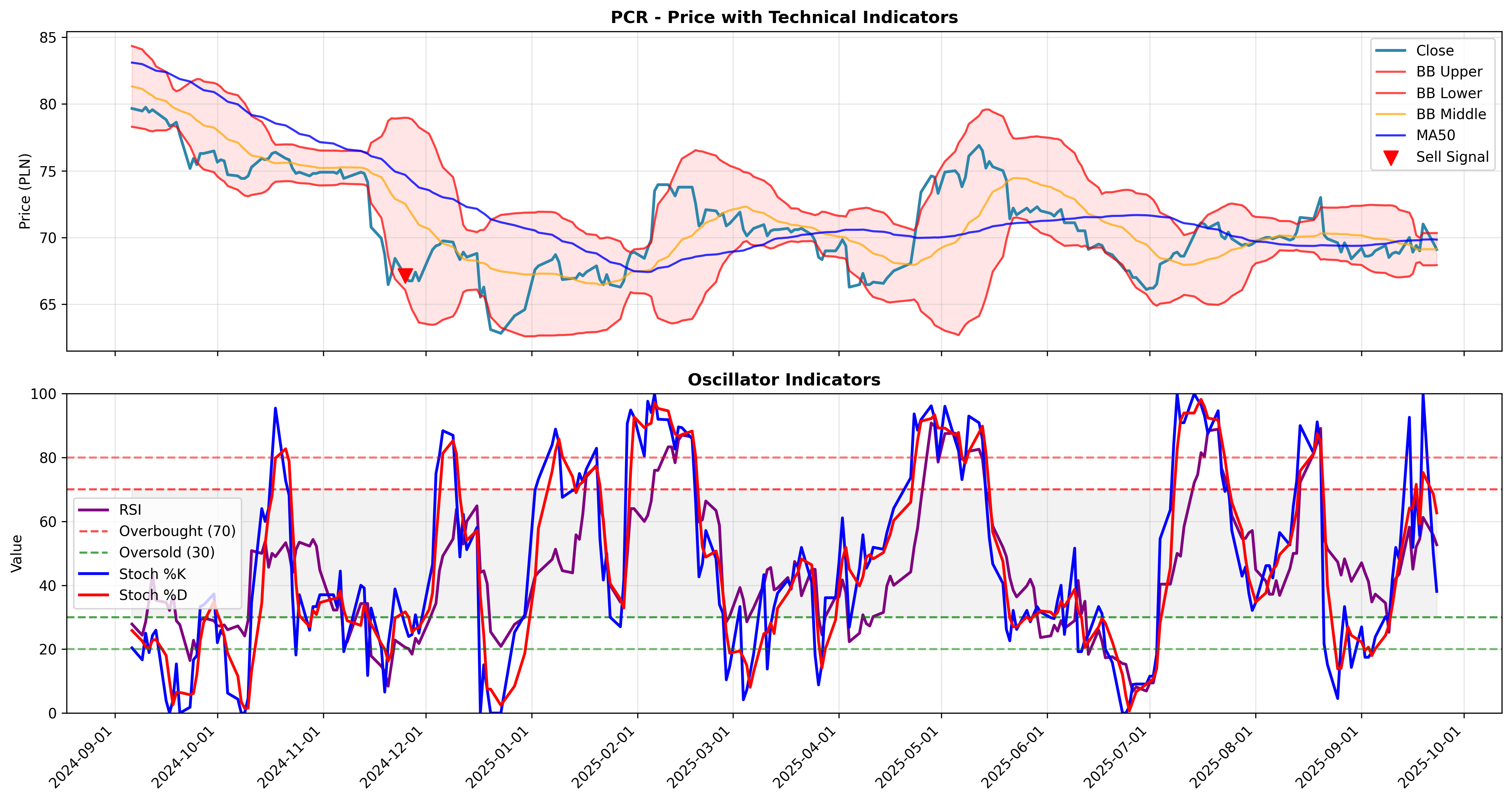
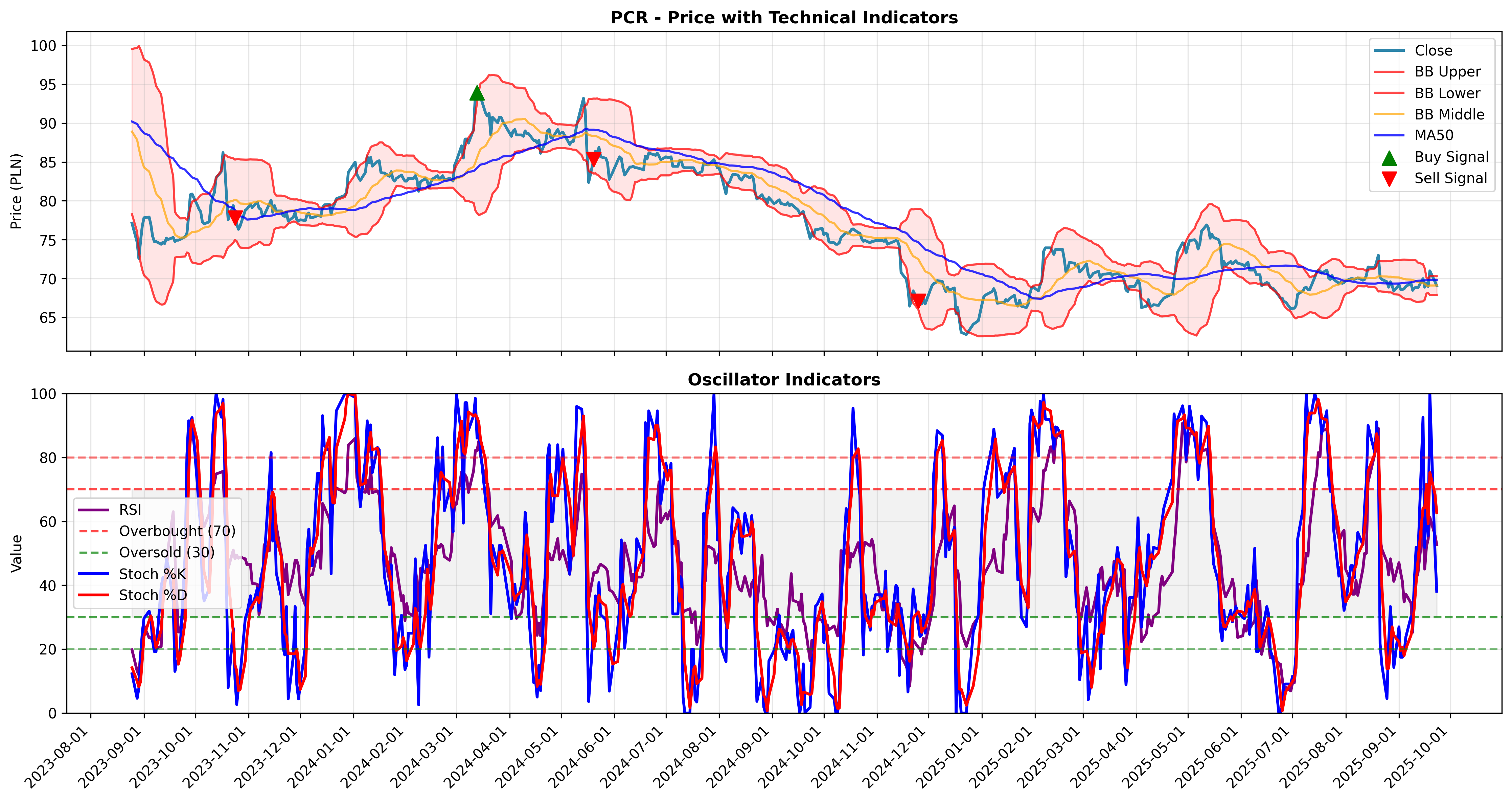
Backtest Summary - PCR
Generated: 2025-09-24 06:33:16
📊 Buy & Hold Benchmark
Total Return: +445.96%
Analysis Period: Medium-term
Date Range: {‘start’: Timestamp(‘2014-06-25 00:00:00’), ’end’: Timestamp(‘2025-09-23 00:00:00’), ‘days’: 4108}
This represents the return from buying at the start and holding until the end of the analysis period.
Performance Overview
| Strategy | Symbol | Total Return | 3M Return | 6M Return | 12M Return | 24M Return | Excess Return | Sharpe Ratio | Max Drawdown | Trades | Win Rate | Final Value |
|---|---|---|---|---|---|---|---|---|---|---|---|---|
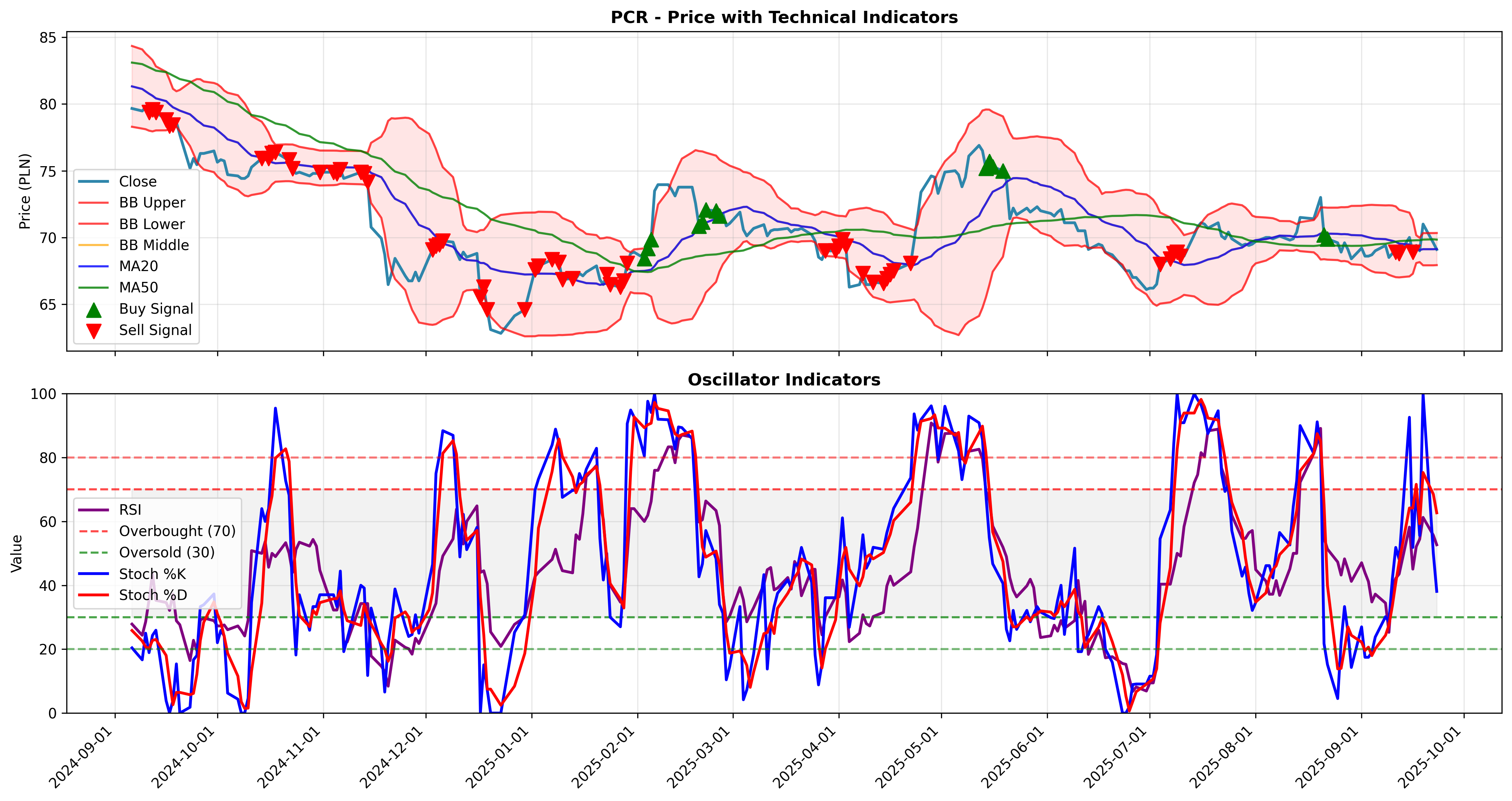
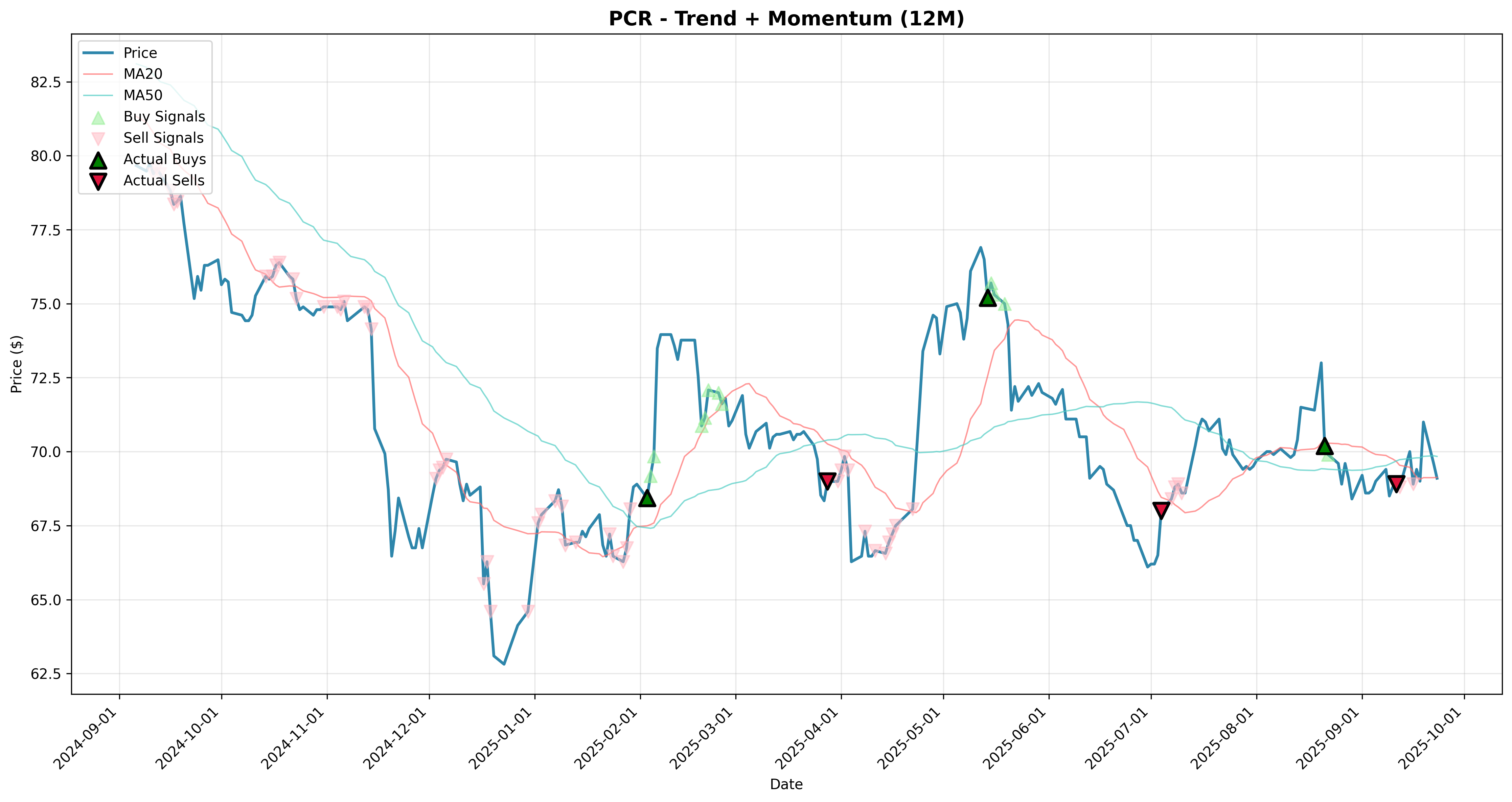
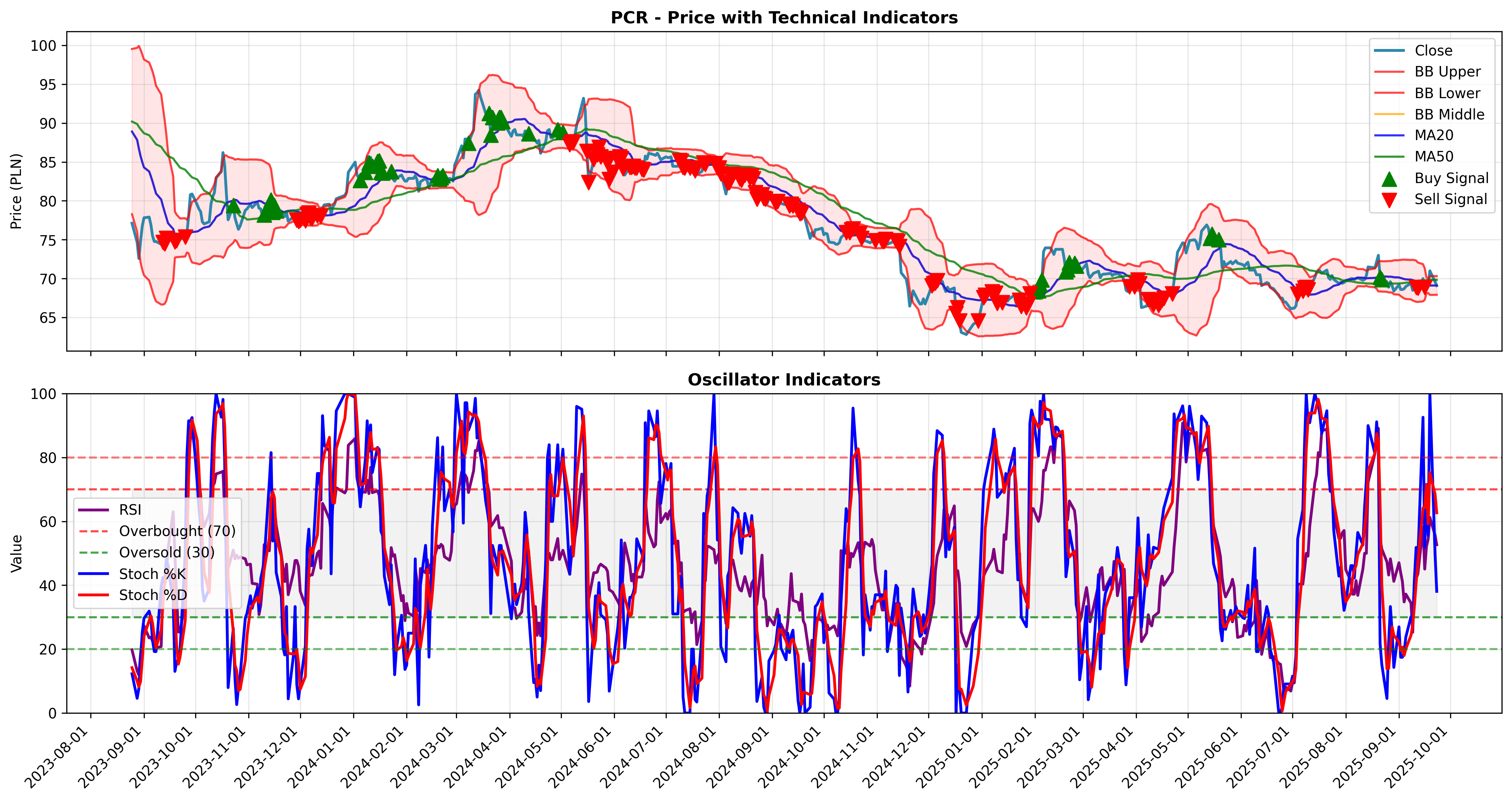
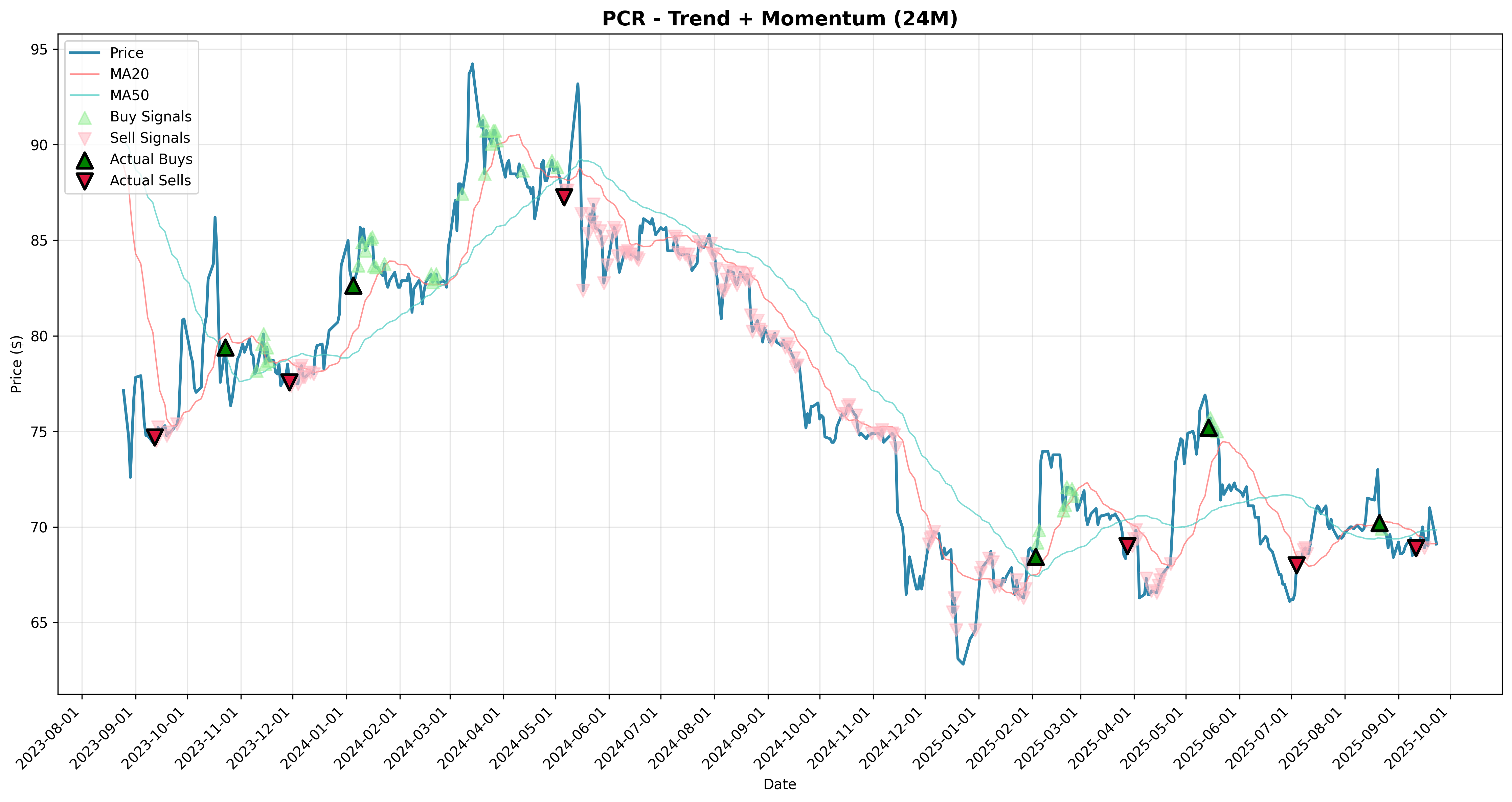
| trend_momentum | PCR | 116.31% | -1.6% | -12.8% | -10.5% | -7.7% | -329.65% | 0.35 | -42.36% | 54 | 50.00% | $216,314 |
| dow_theory | PCR | 0.00% | 0.0% | 0.0% | 0.0% | 0.0% | 0.00% | 0.00 | 0.00% | 0 | 0.00% | $100,000 |
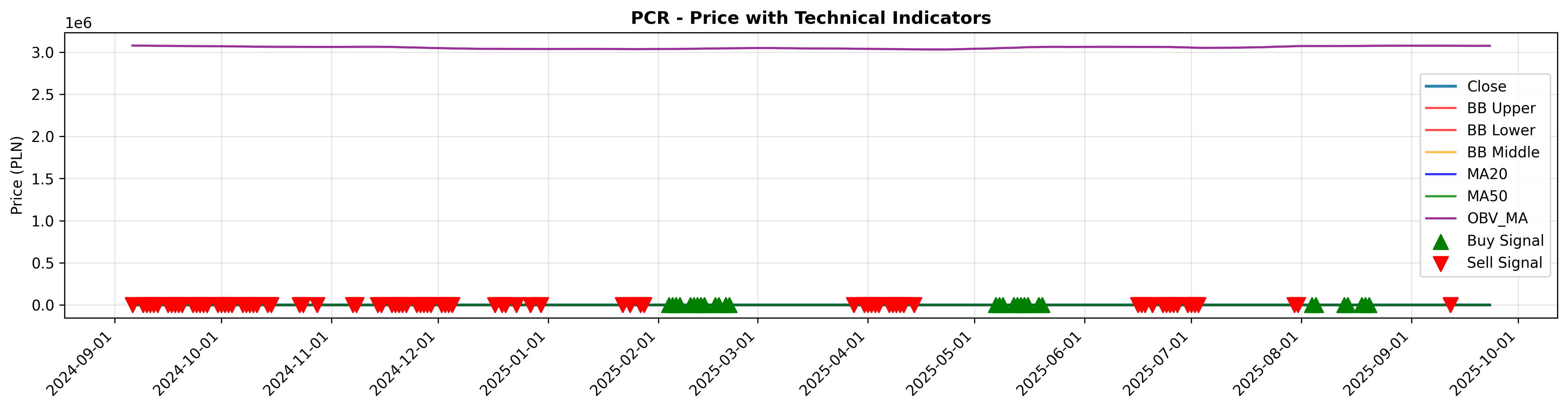
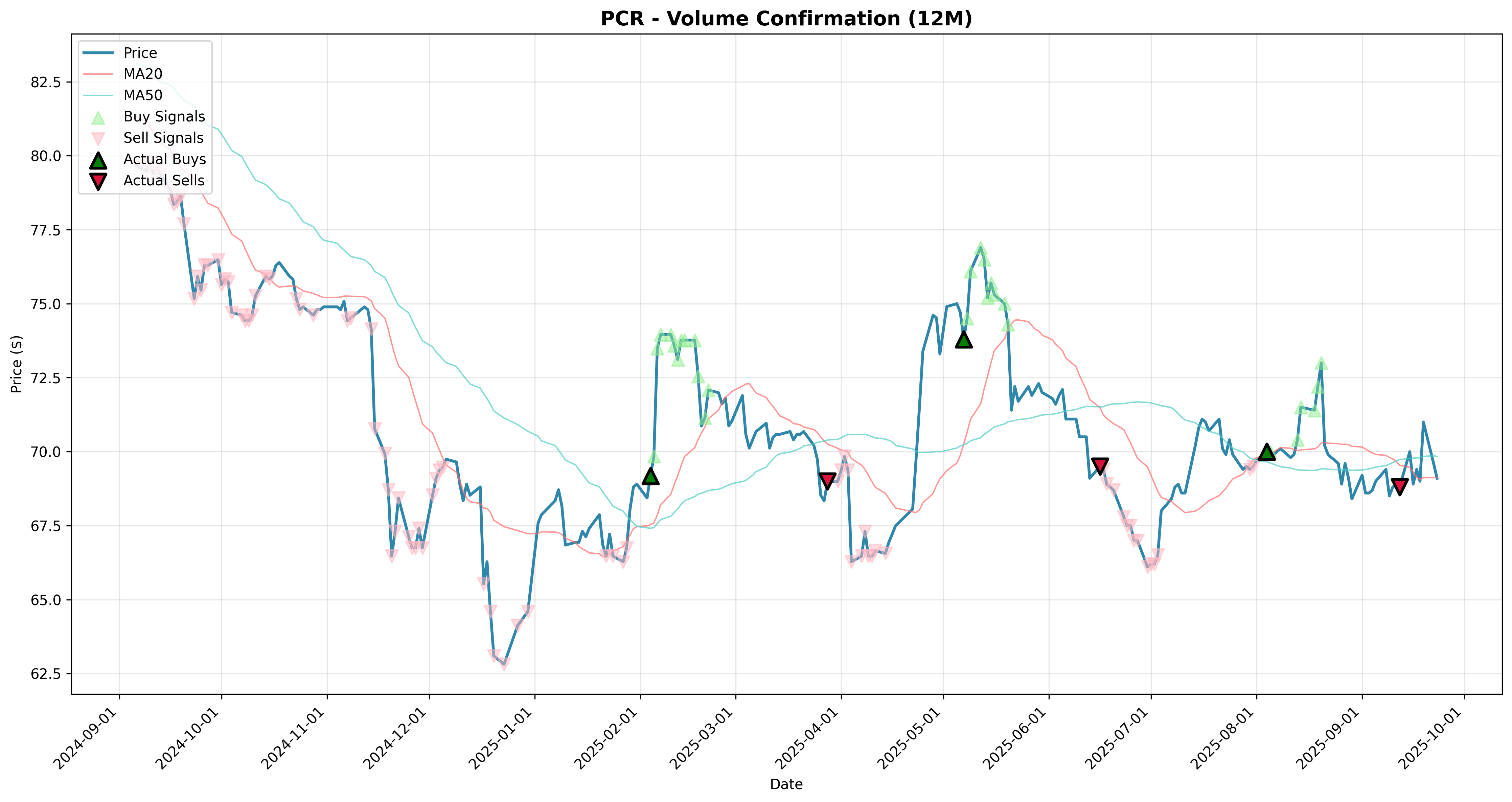
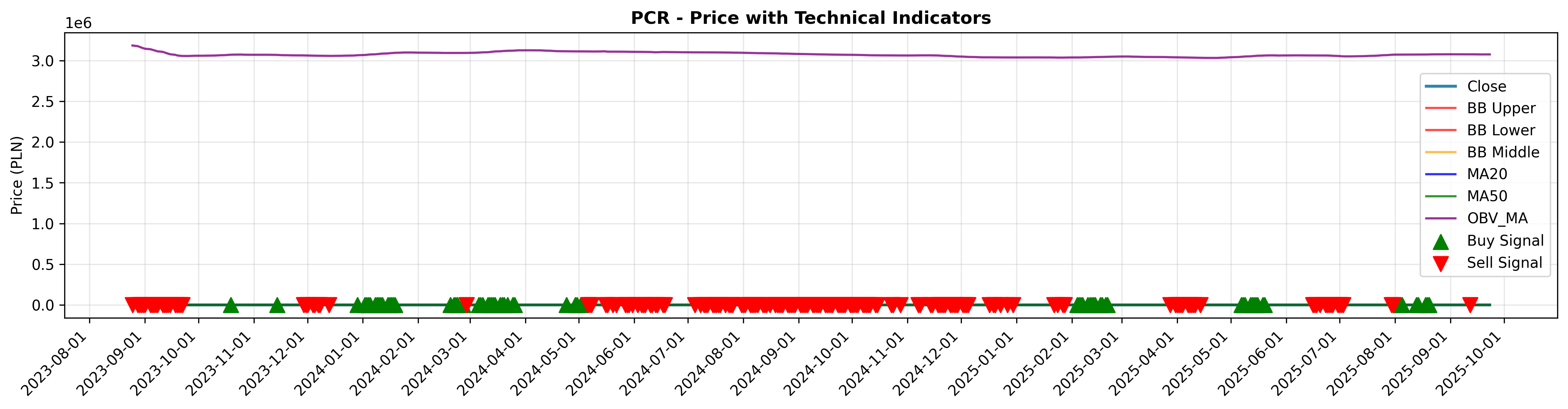
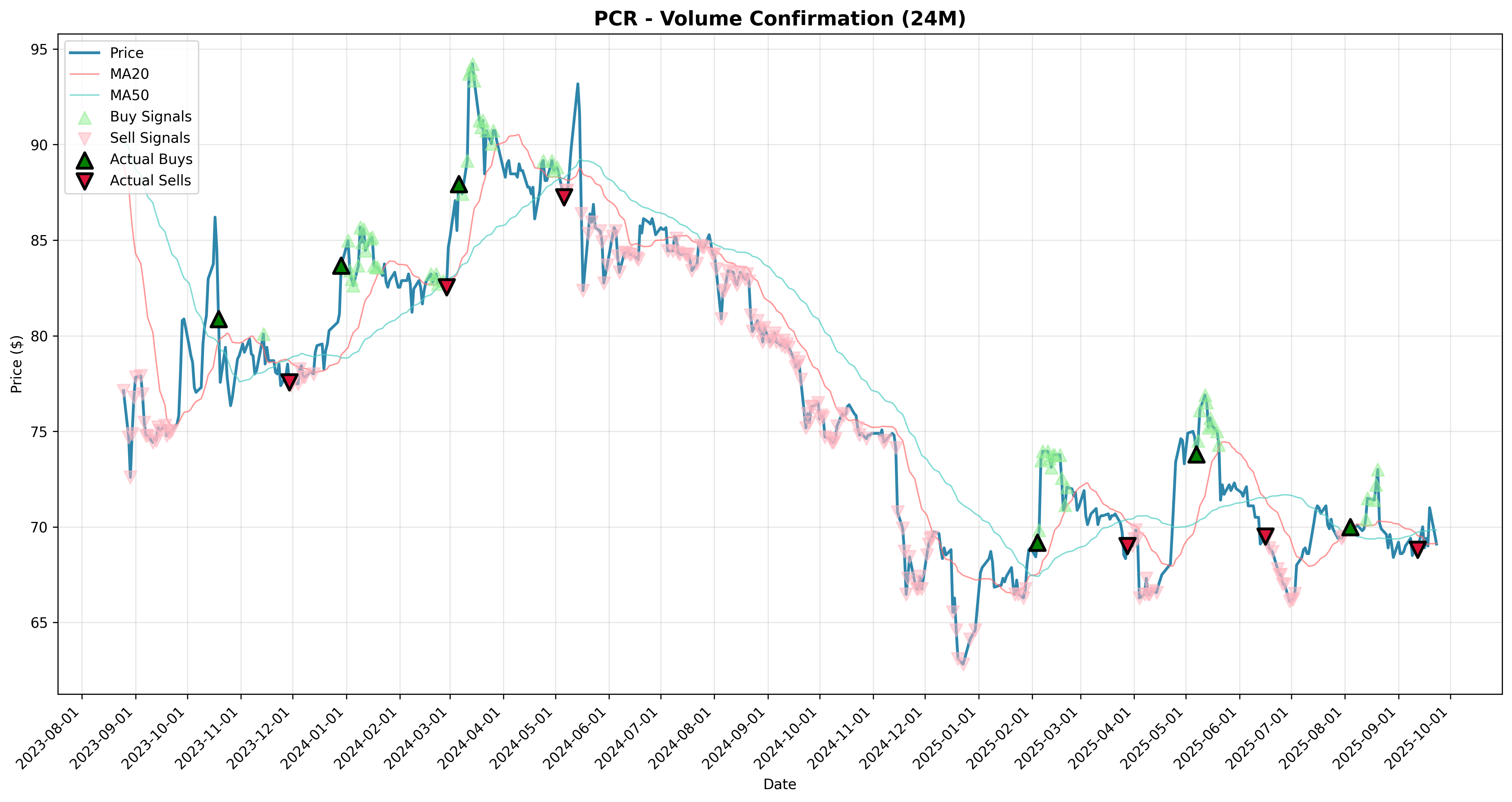
| volume_confirmation | PCR | 206.55% | -1.7% | -9.0% | -7.7% | -13.4% | -239.41% | 0.51 | -43.42% | 48 | 50.00% | $306,545 |
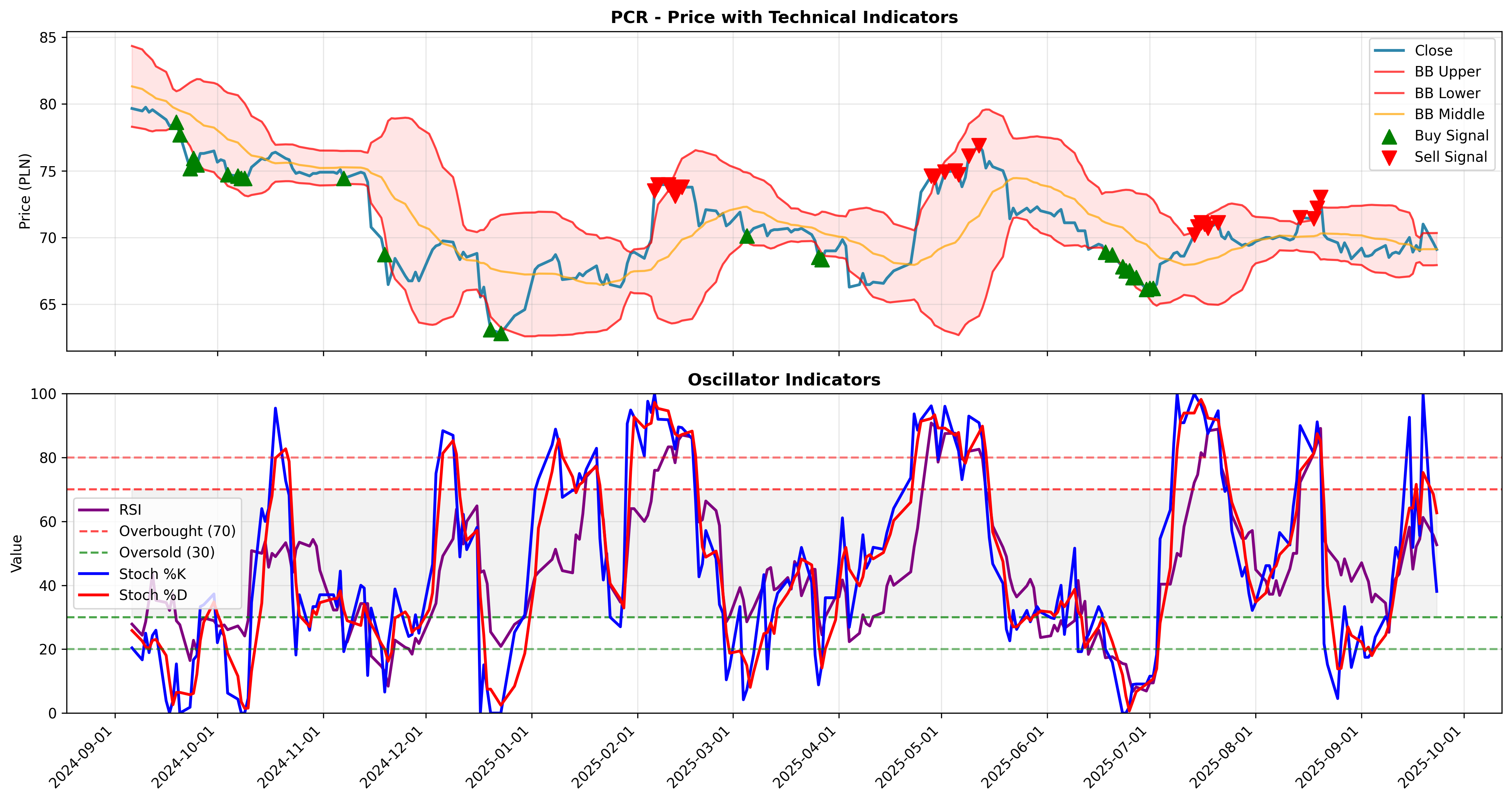
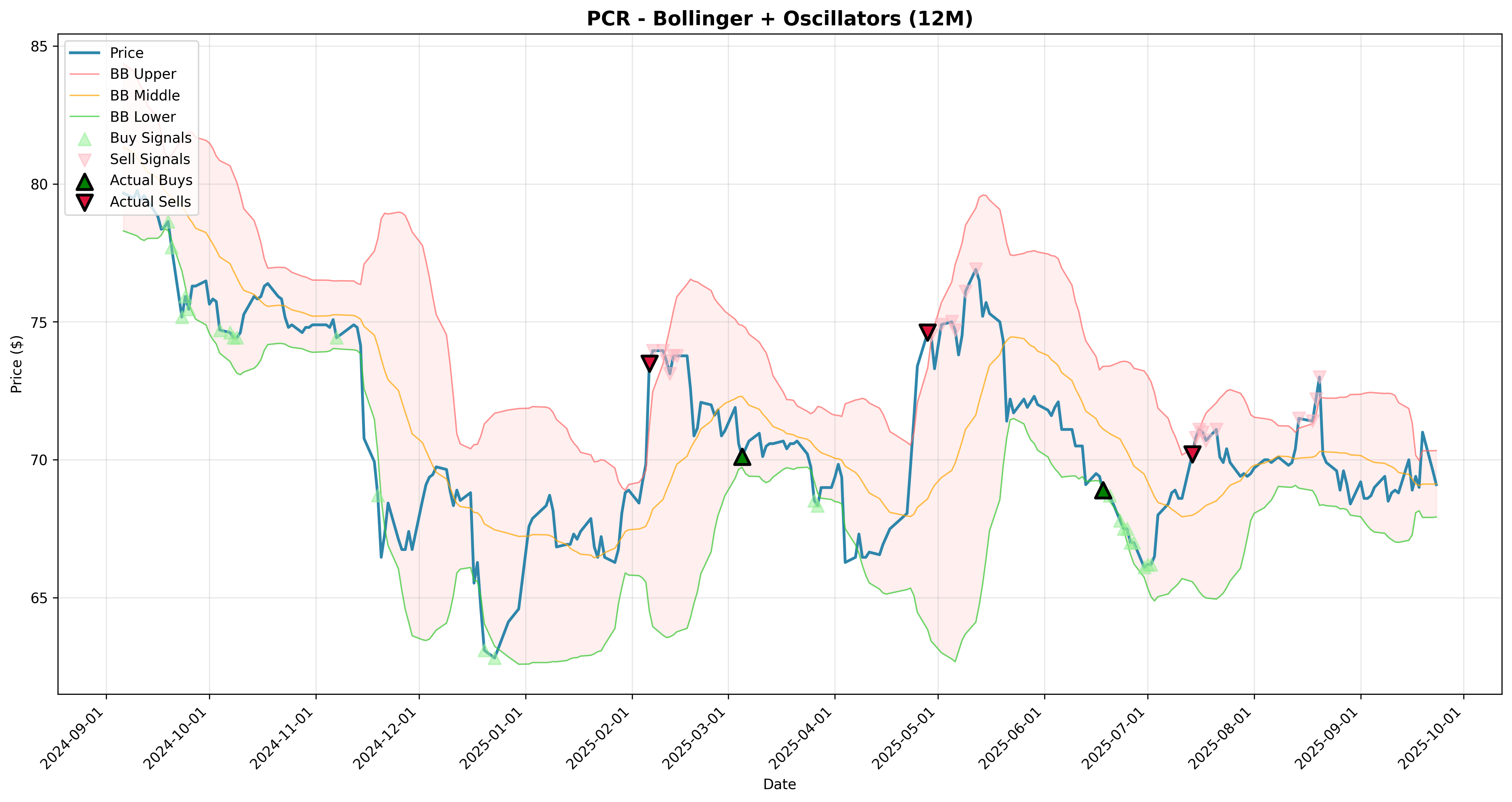
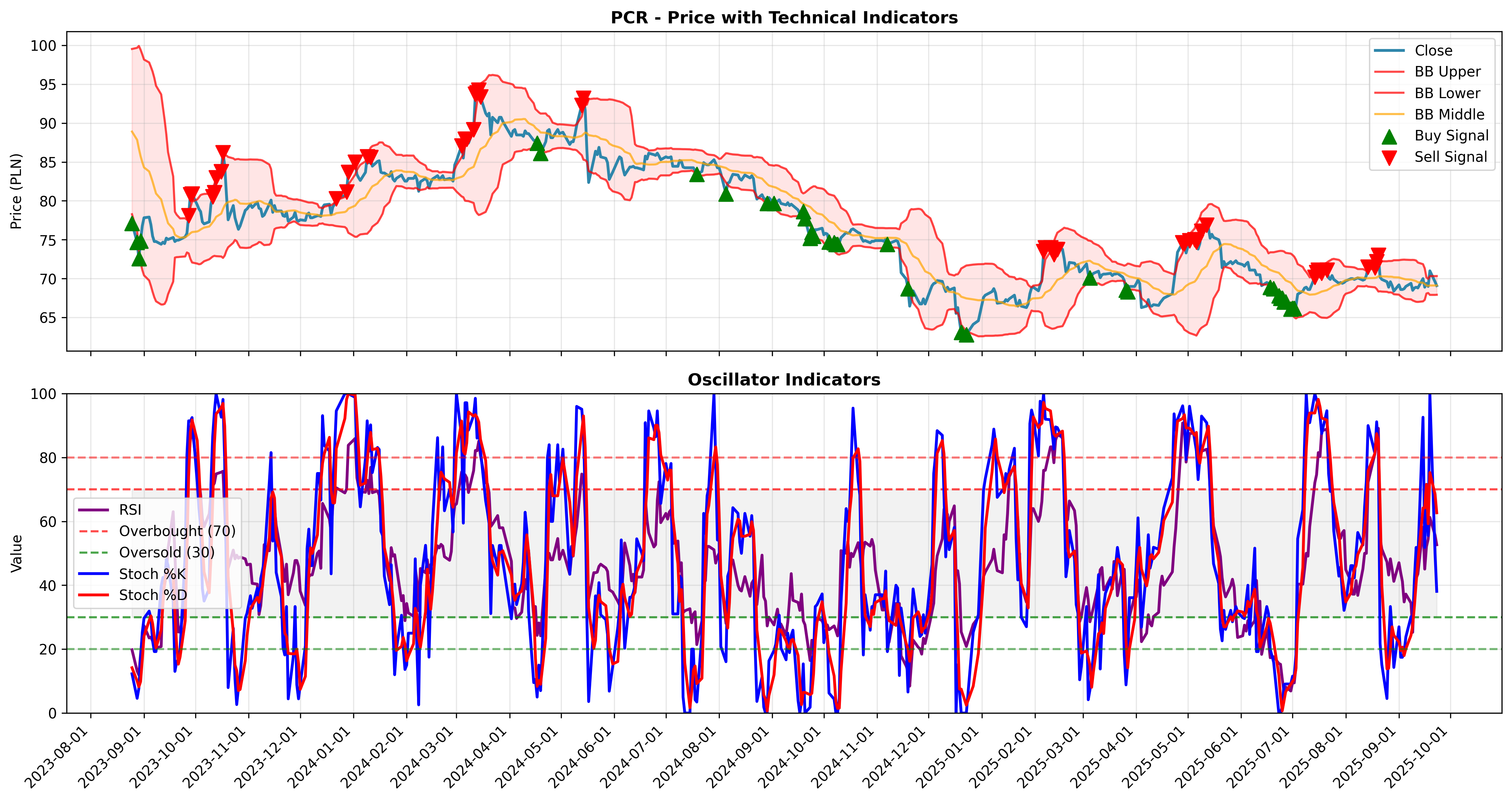
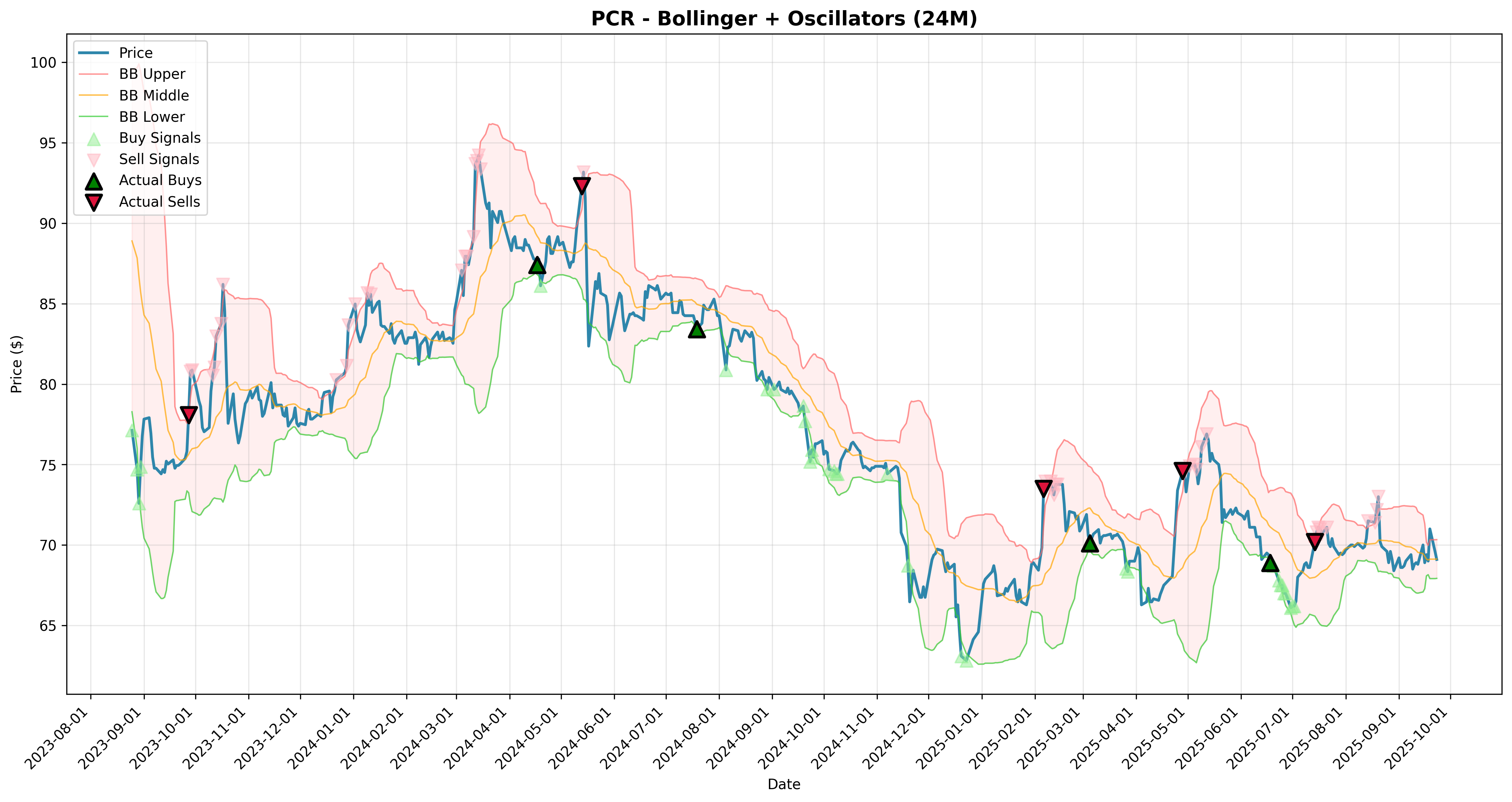
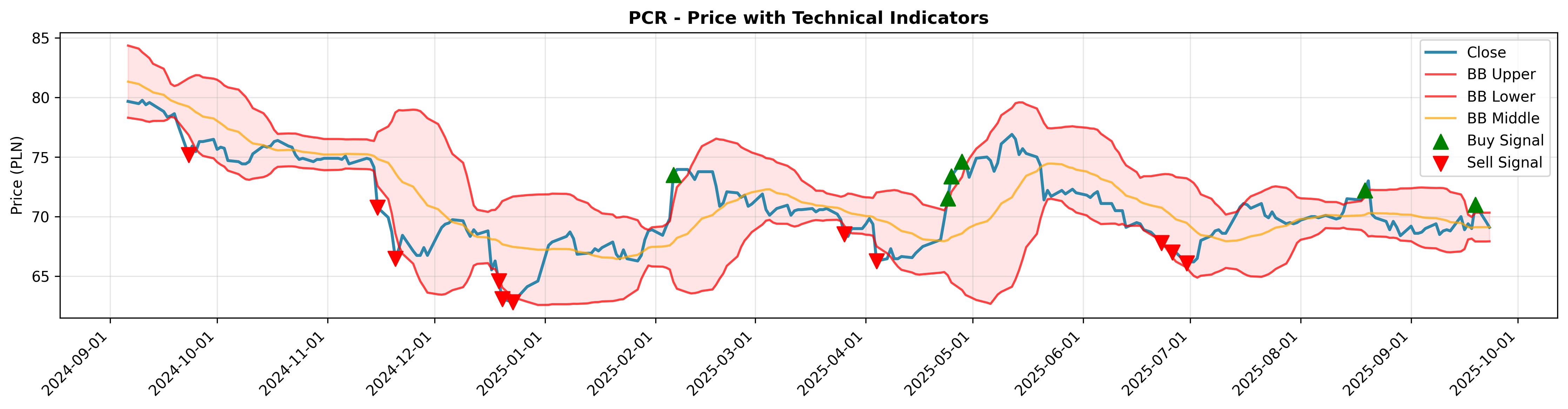
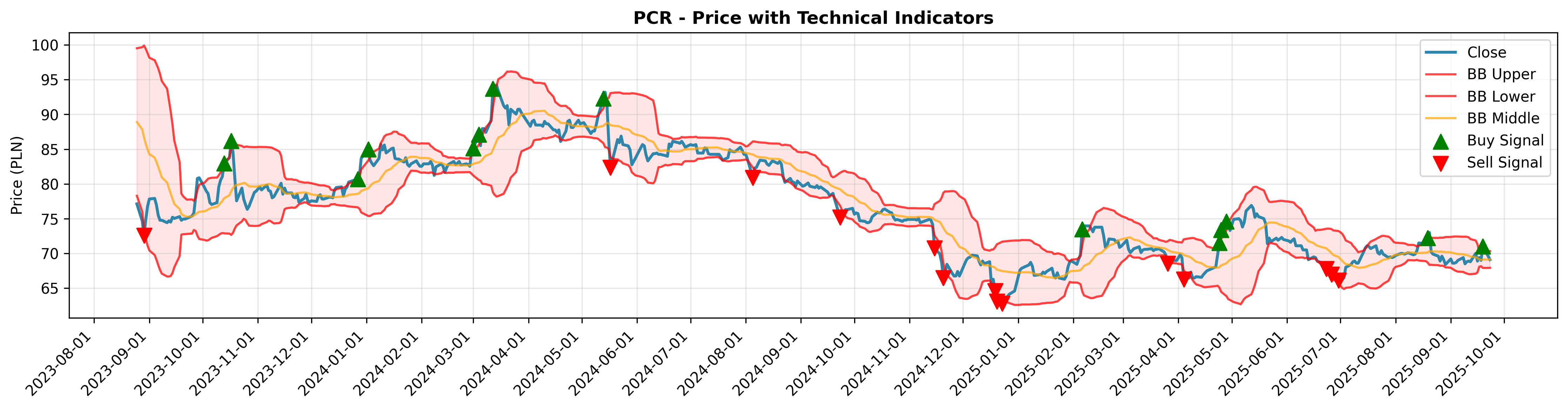
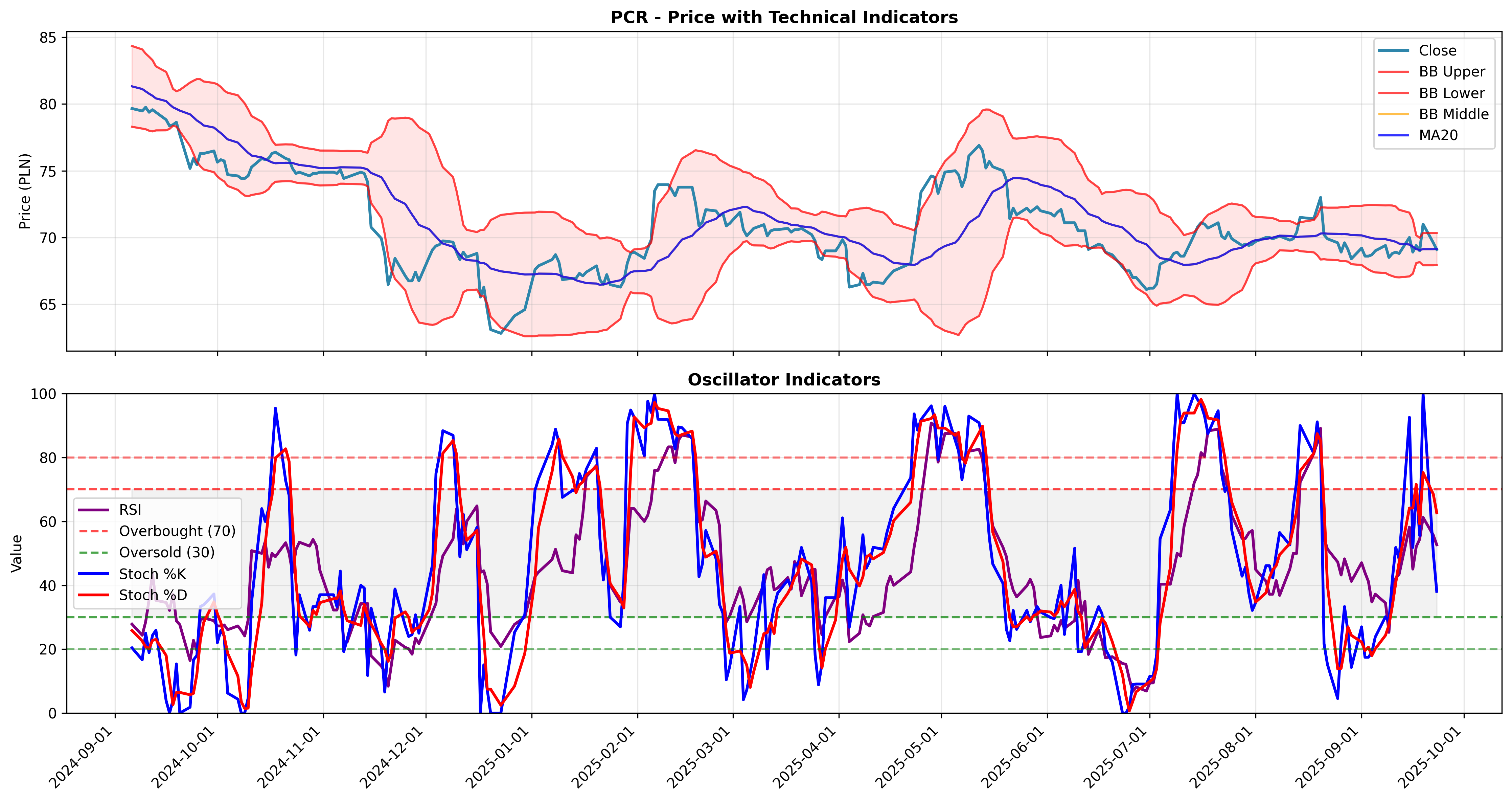
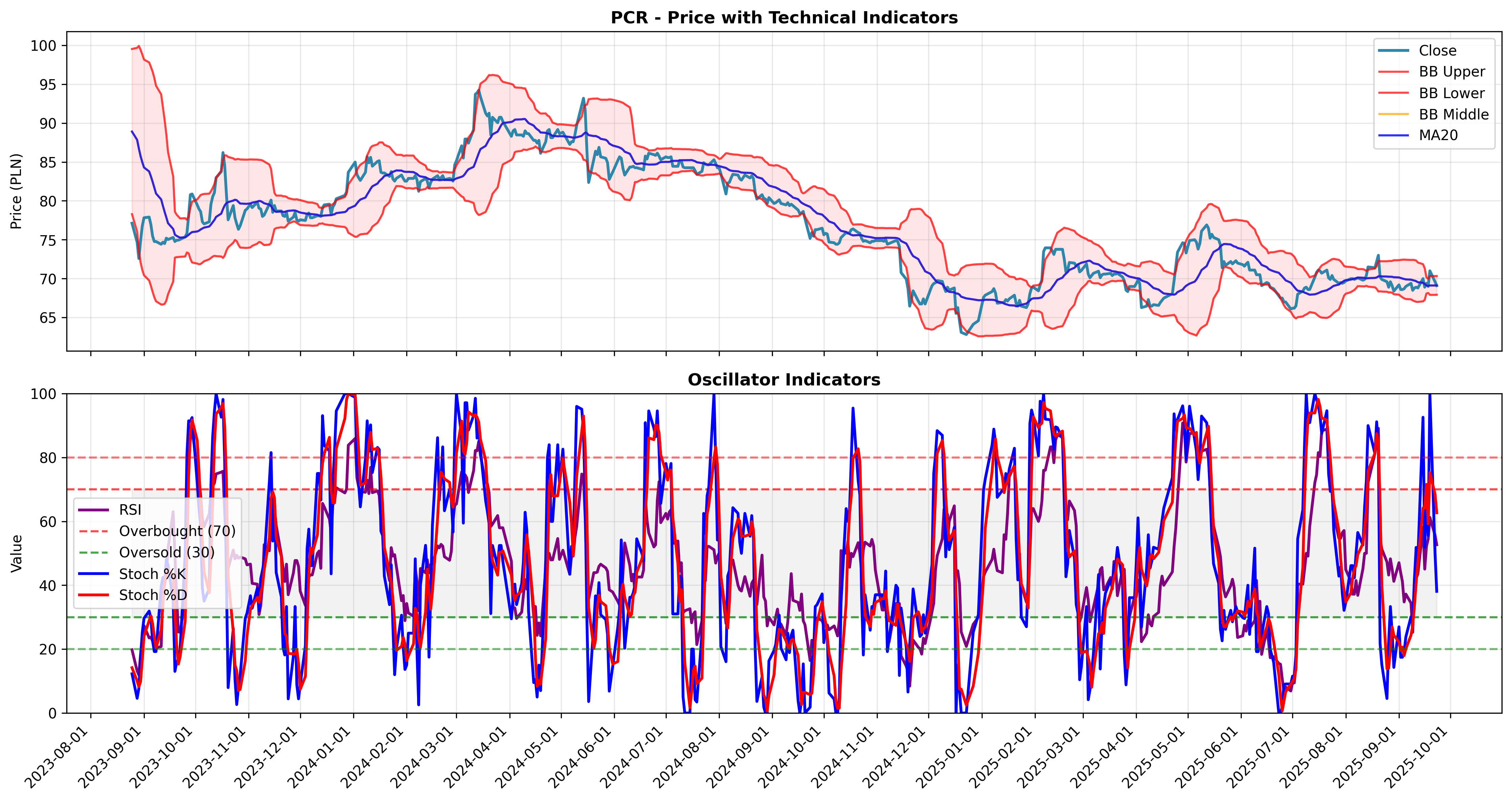
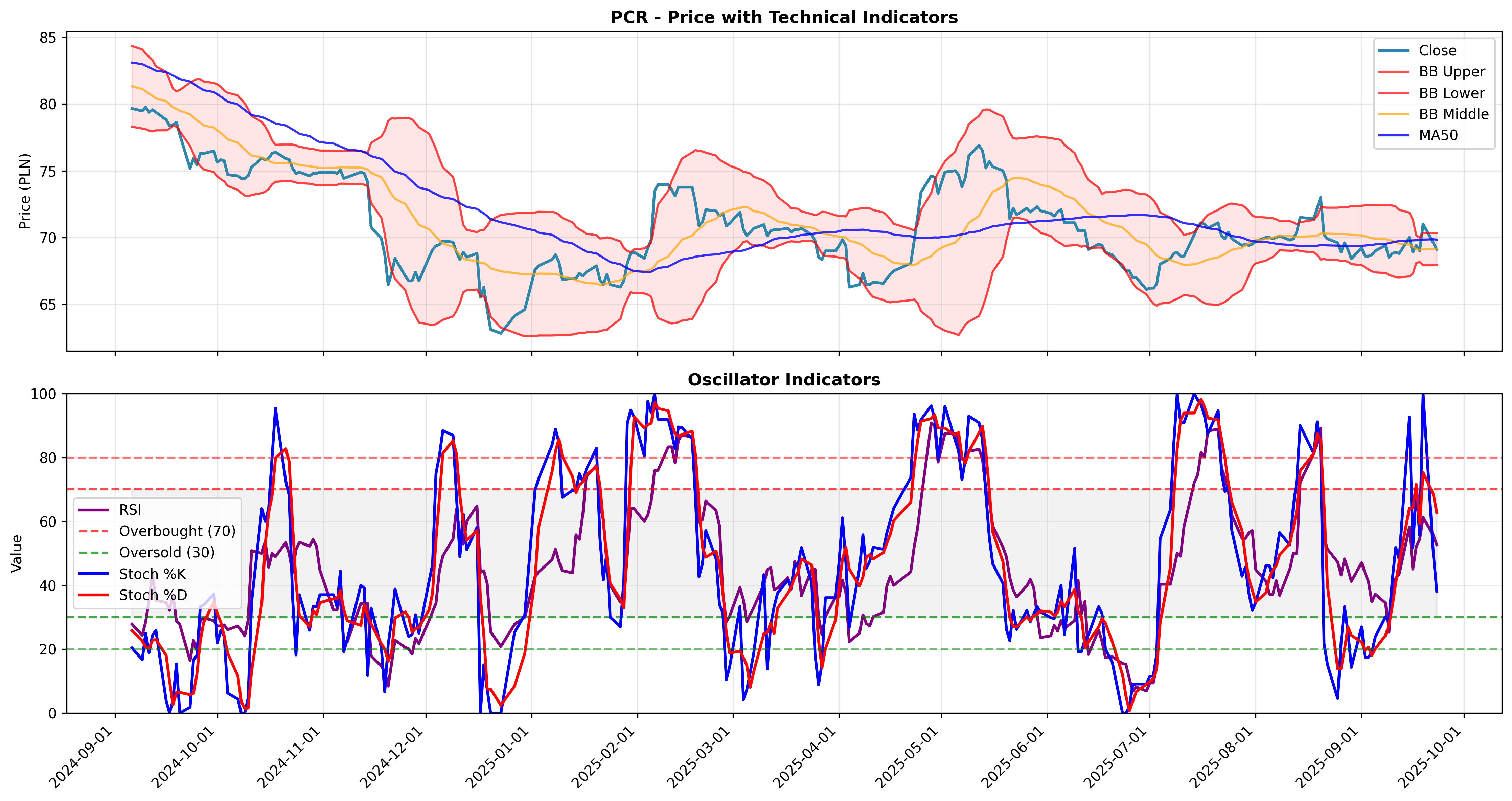
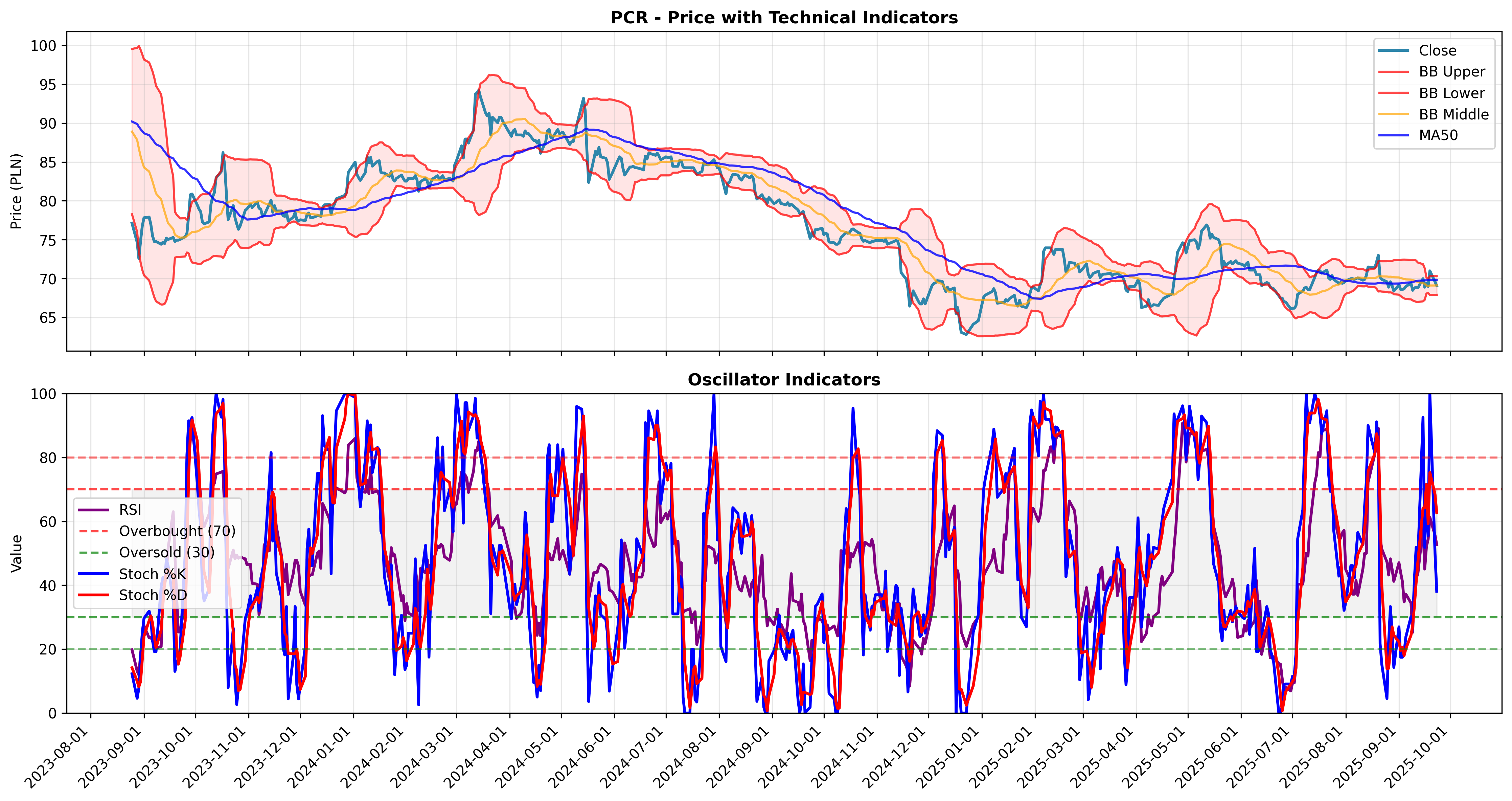
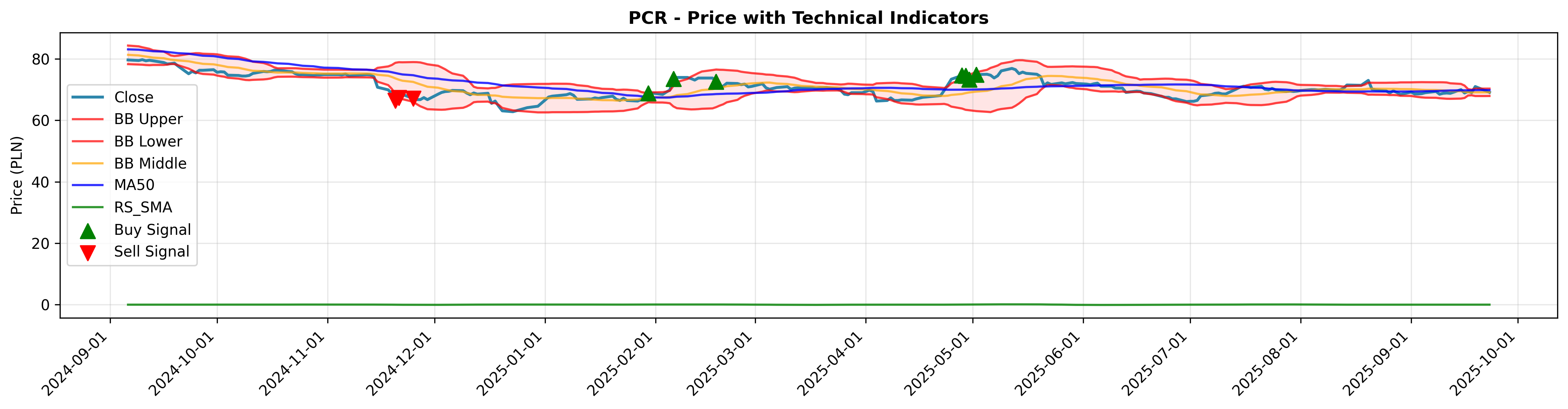
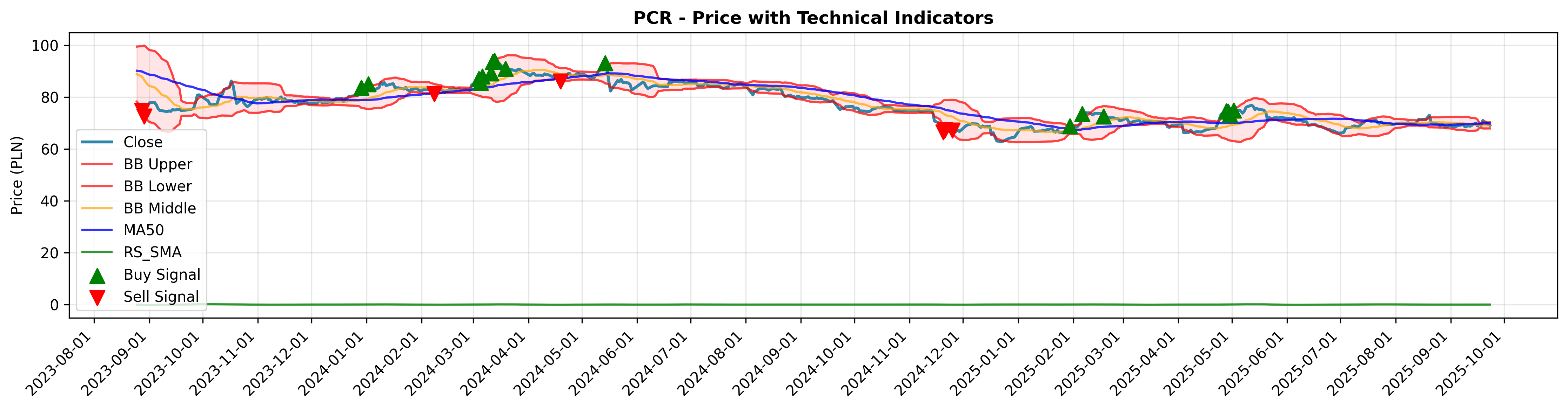
| bollinger_oscillators | PCR | -1.62% | 3.5% | 8.3% | 6.0% | 4.5% | -447.58% | -0.01 | -63.54% | 48 | 50.00% | $98,377 |
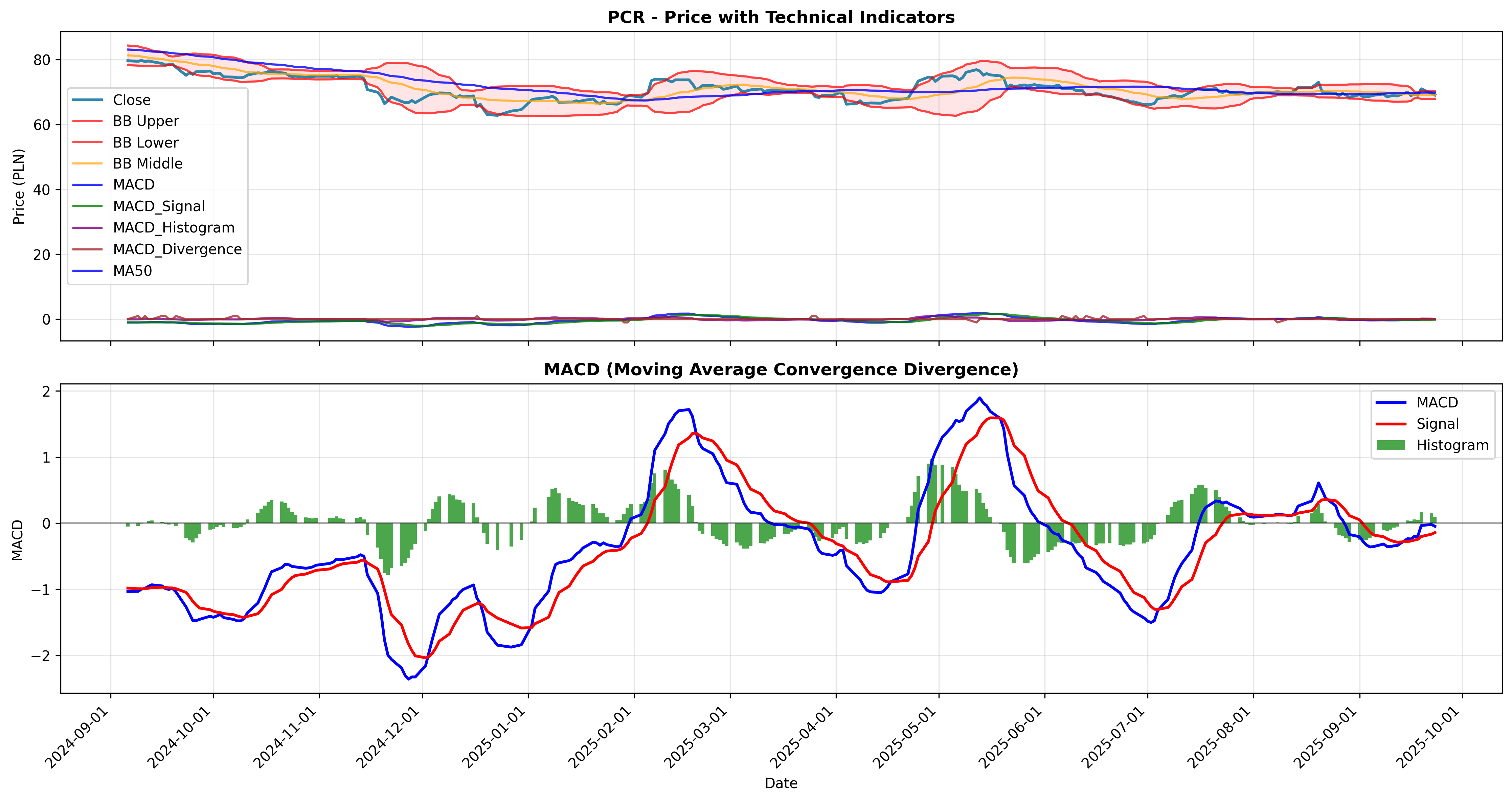
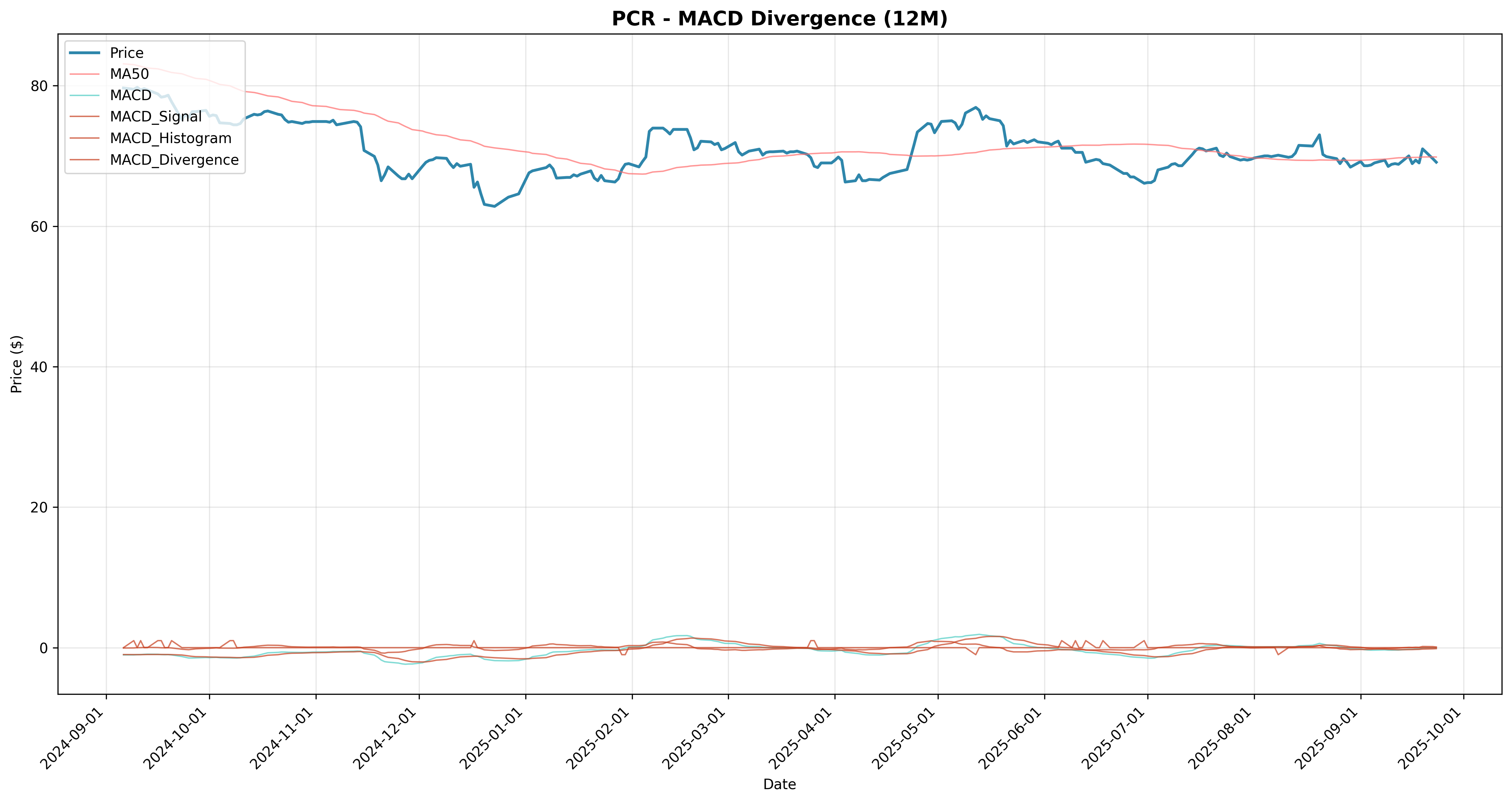
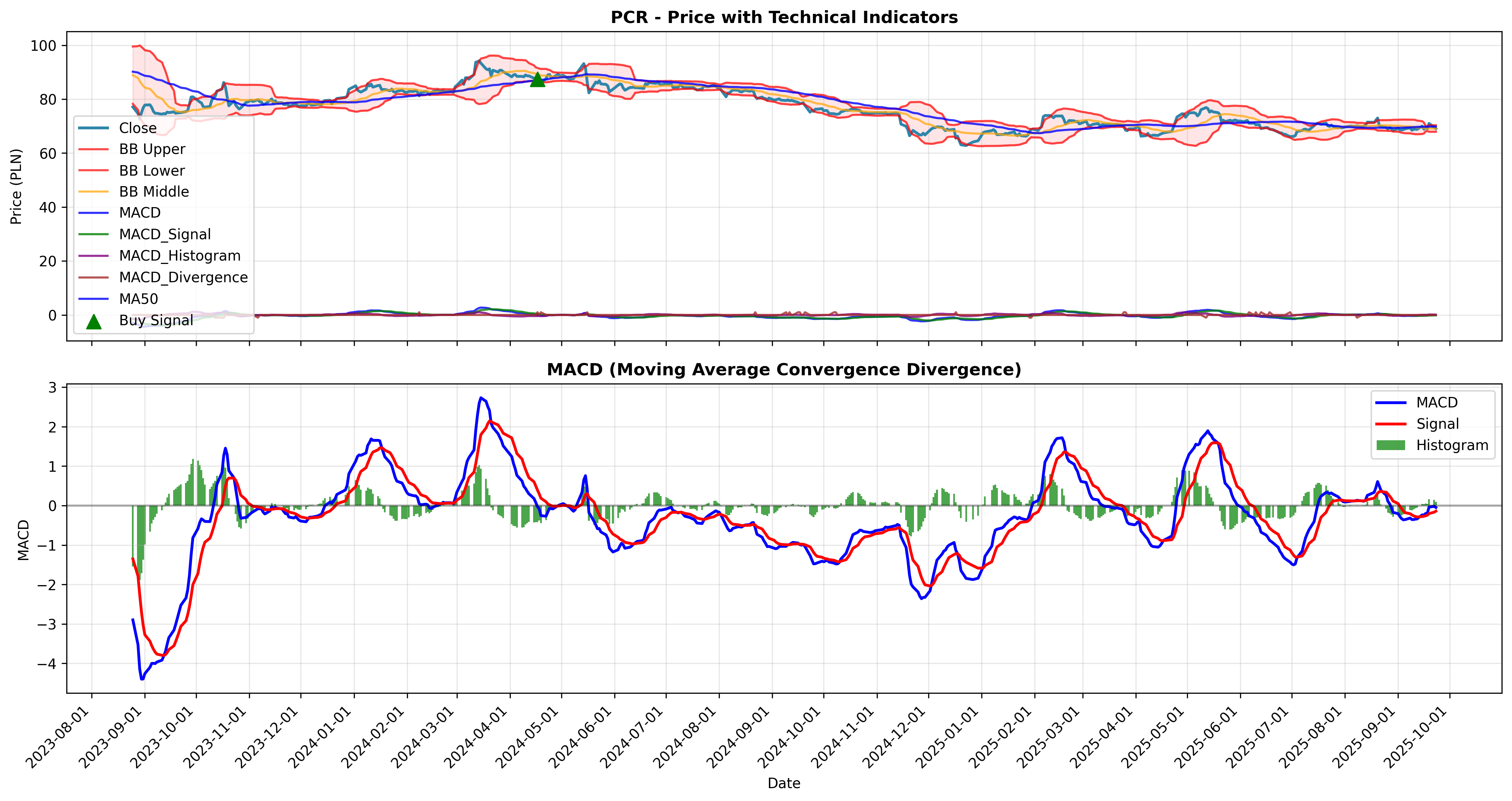
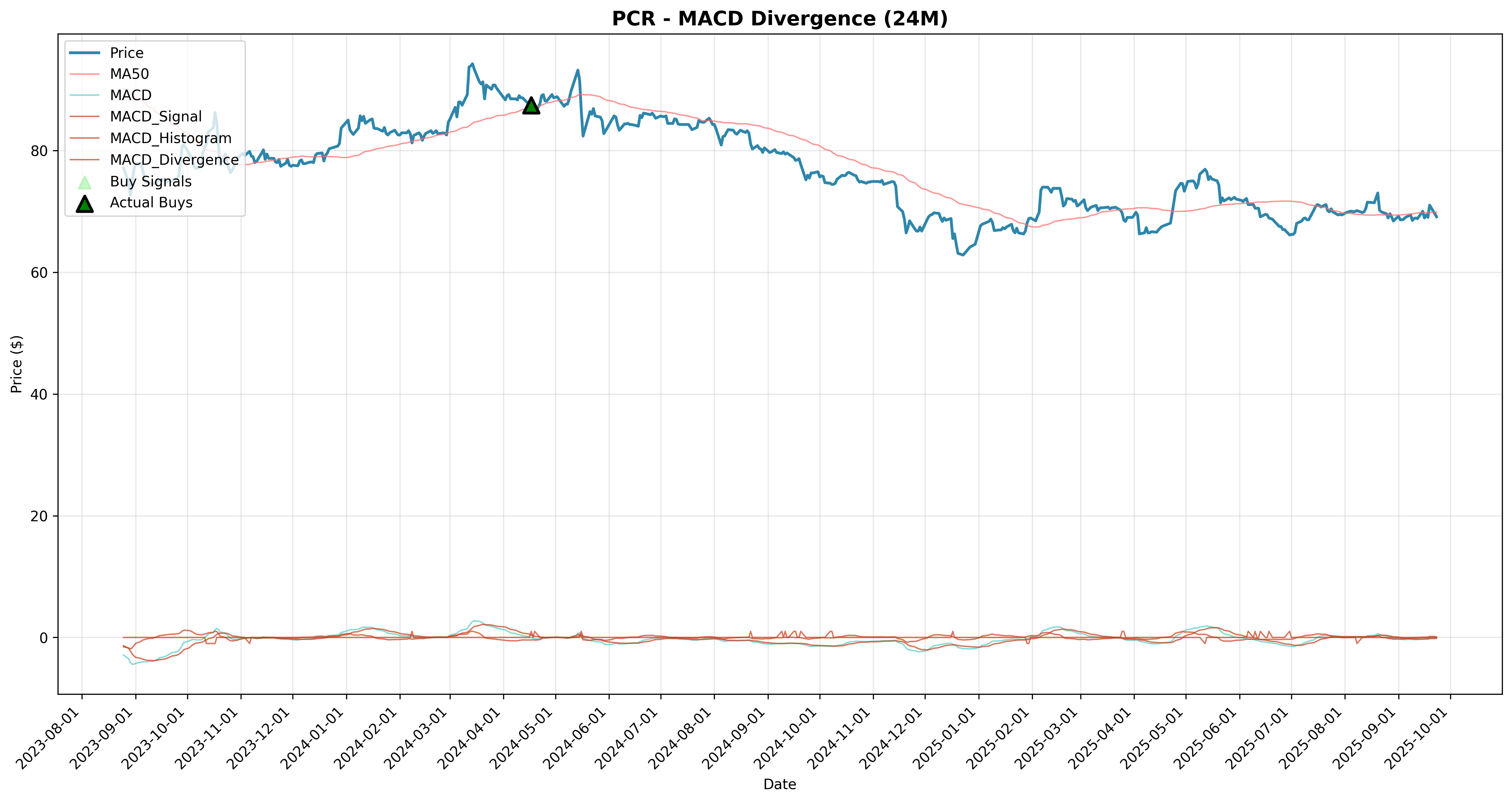
| macd_divergence | PCR | -20.96% | 1.9% | -1.6% | -8.1% | -21.0% | -466.92% | 0.00 | 0.00% | 1 | 0.00% | $79,043 |
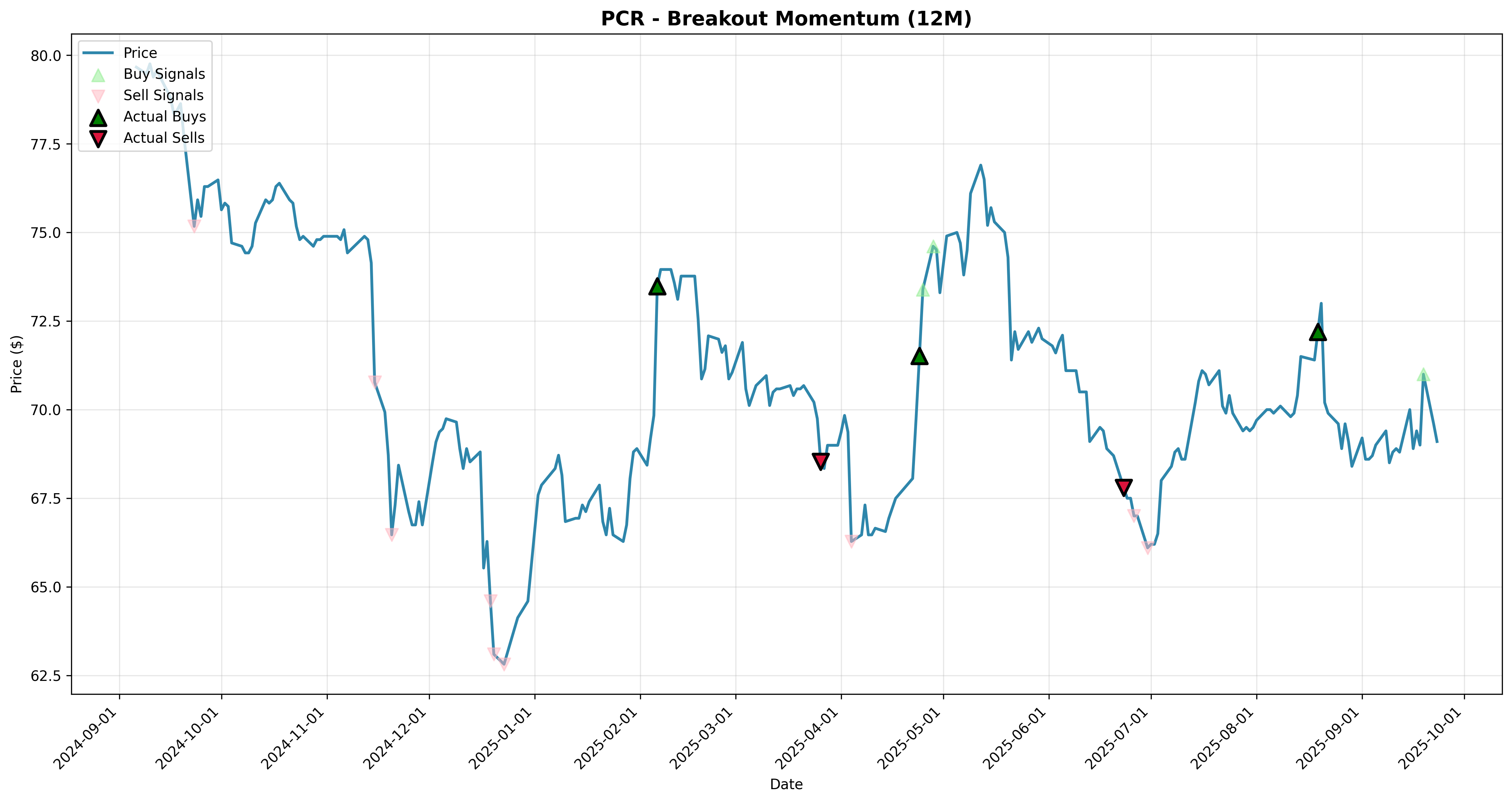
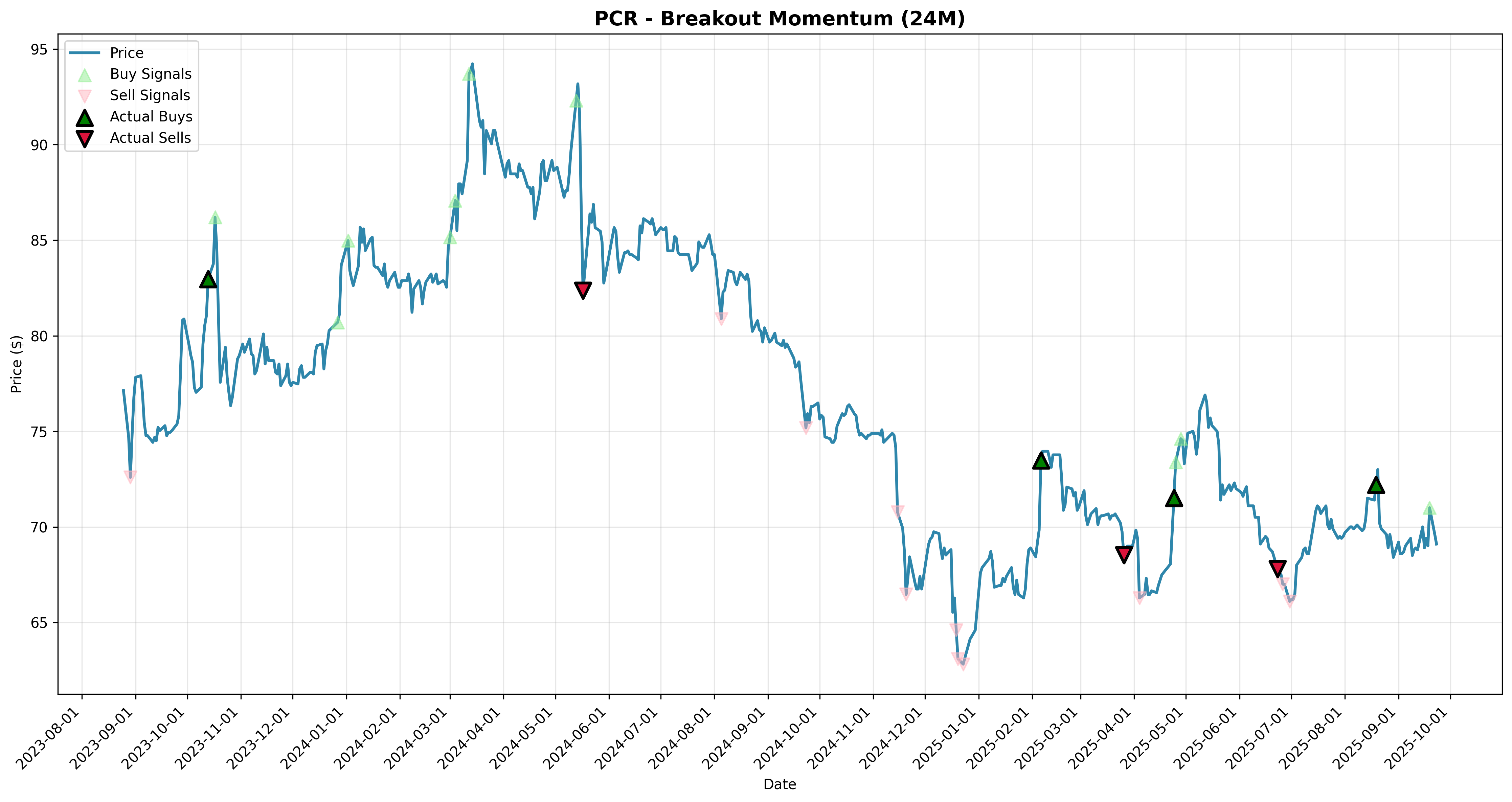
| breakout_momentum | PCR | 364.73% | -4.3% | -11.5% | -15.4% | -16.0% | -81.23% | 0.68 | -37.95% | 35 | 48.57% | $464,730 |
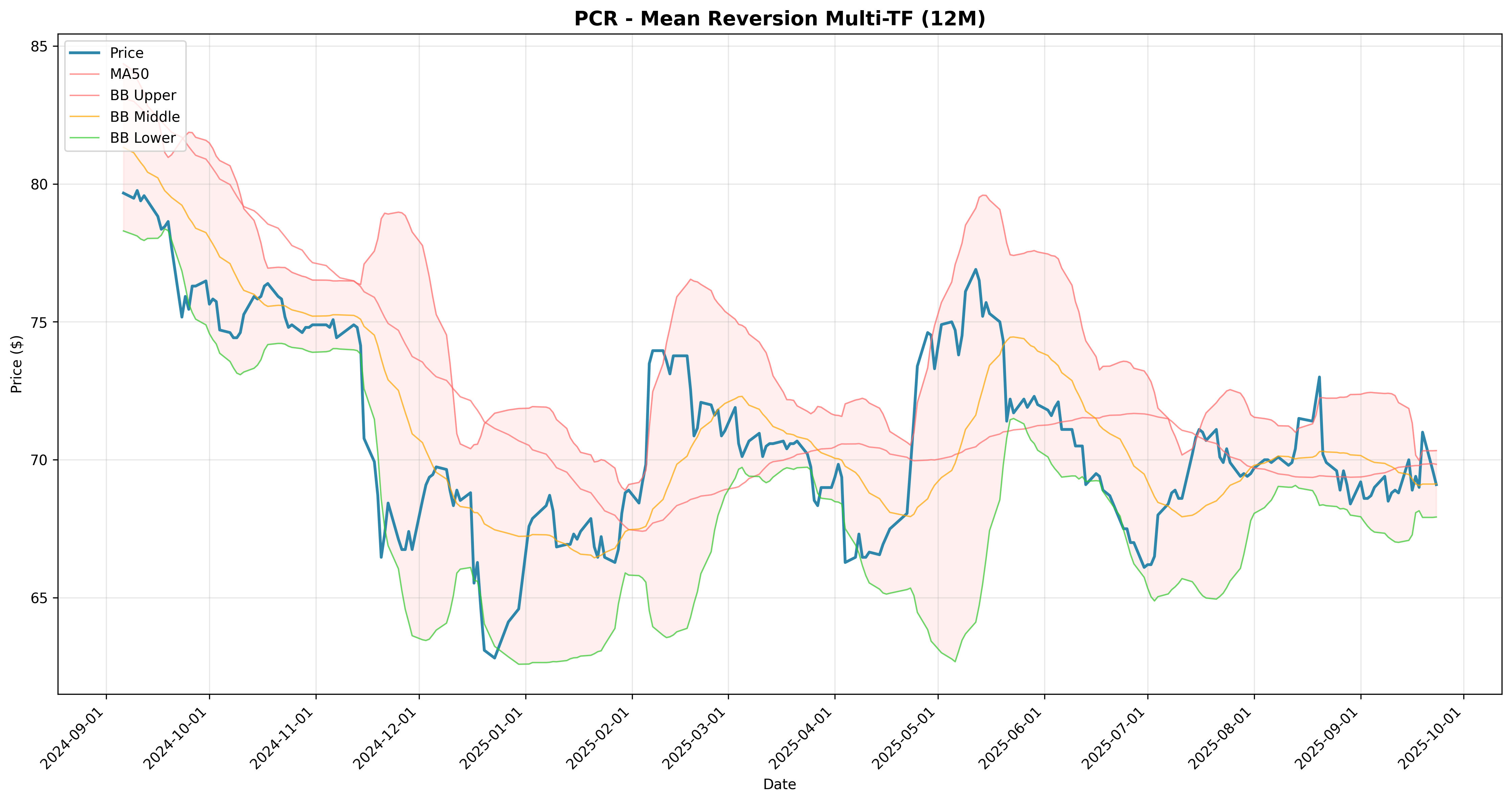
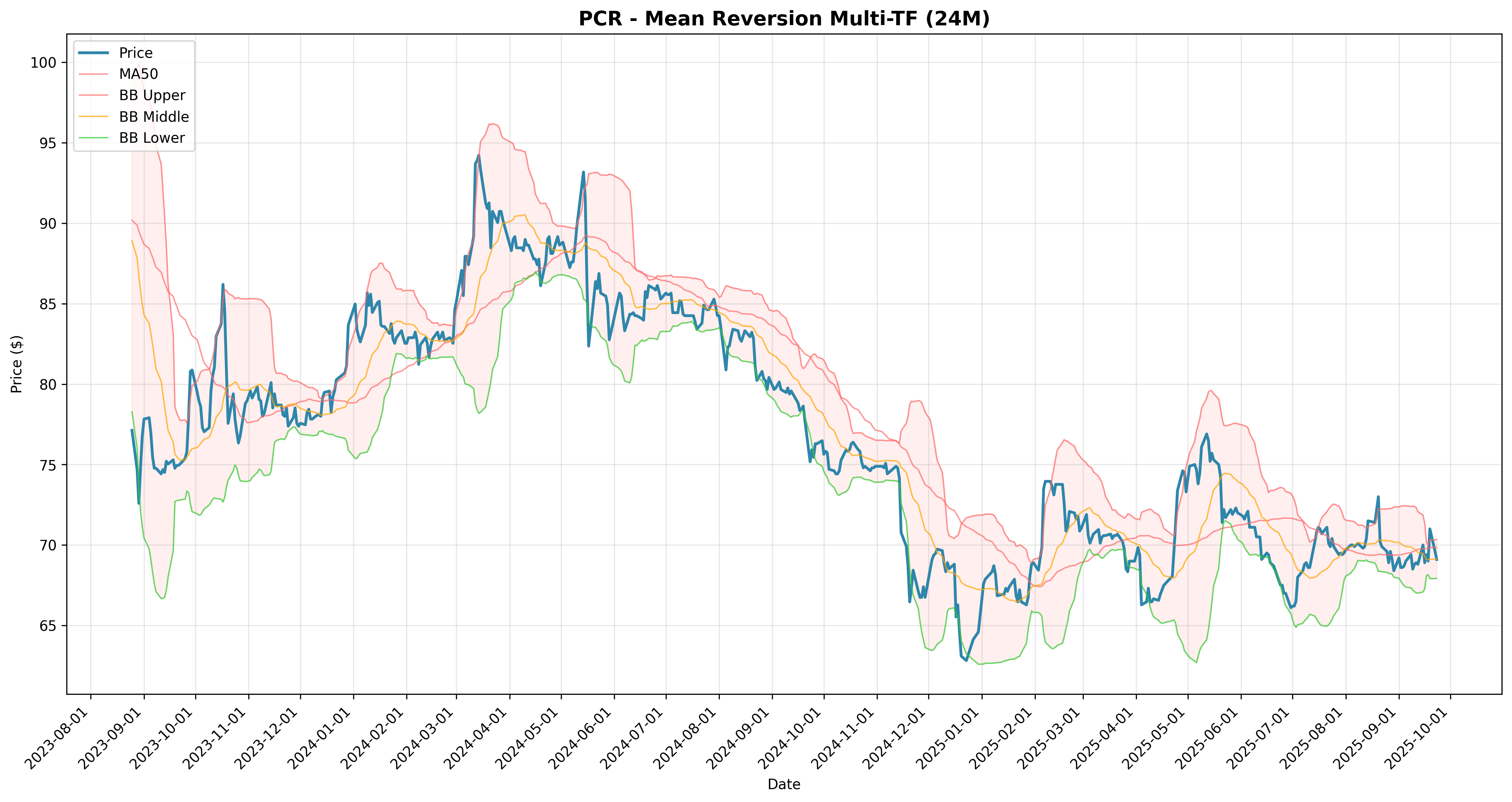
| mean_reversion_multi_tf | PCR | 0.00% | 0.0% | 0.0% | 0.0% | 0.0% | 0.00% | 0.00 | 0.00% | 0 | 0.00% | $100,000 |
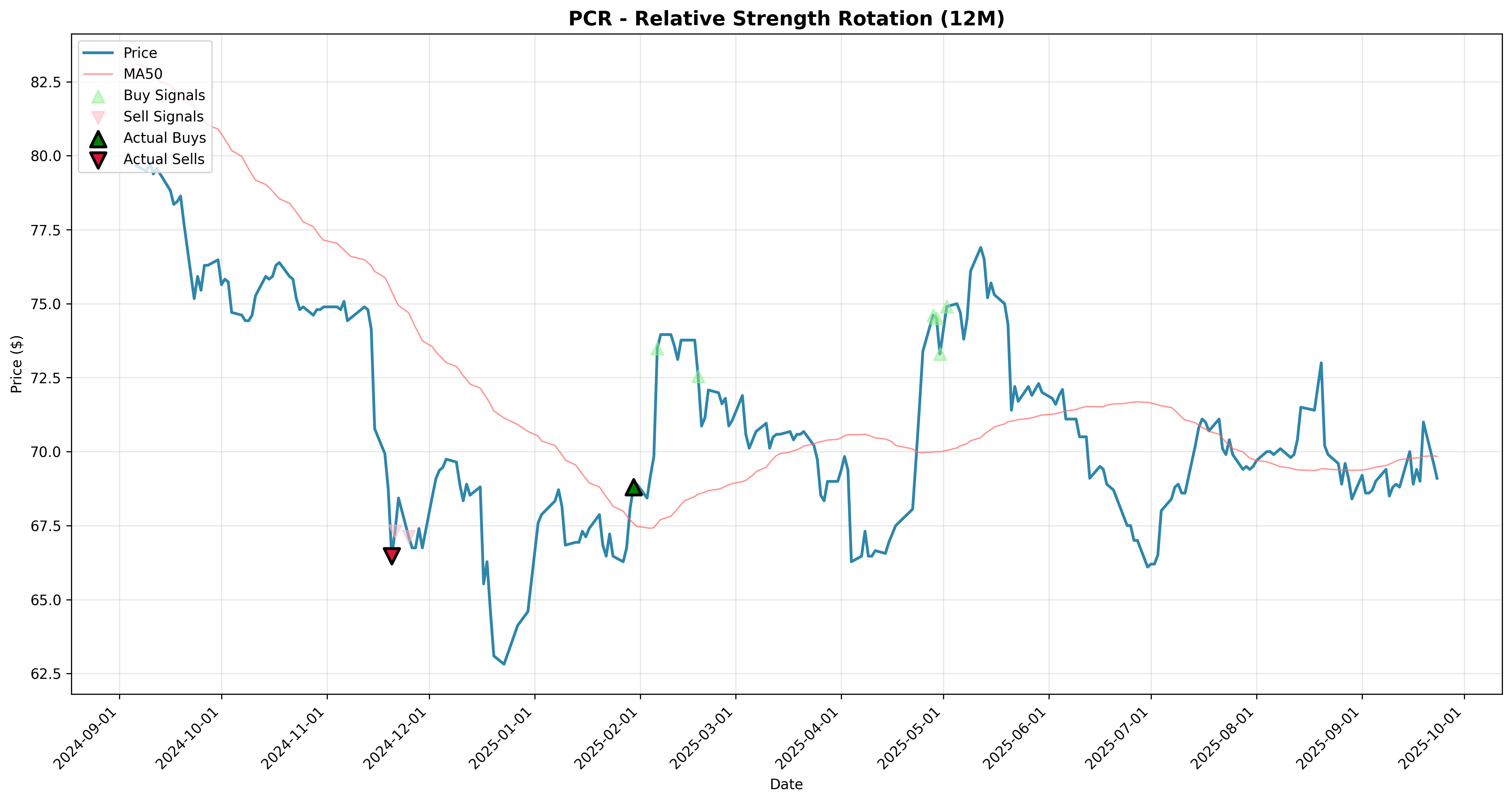
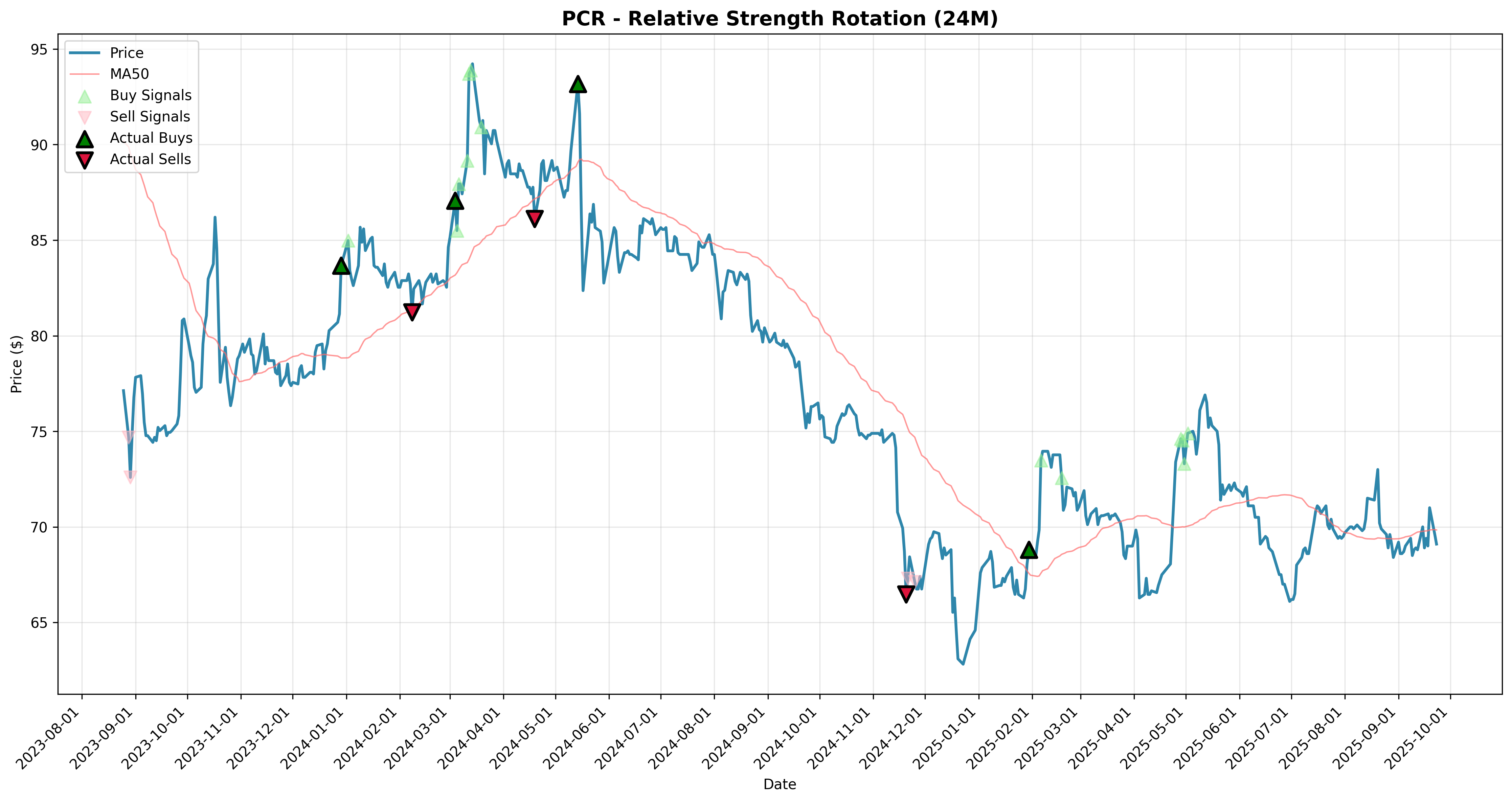
| relative_strength_rotation | PCR | 326.18% | 1.9% | -1.6% | -11.2% | -31.2% | -119.78% | 0.63 | -52.78% | 31 | 48.39% | $426,178 |
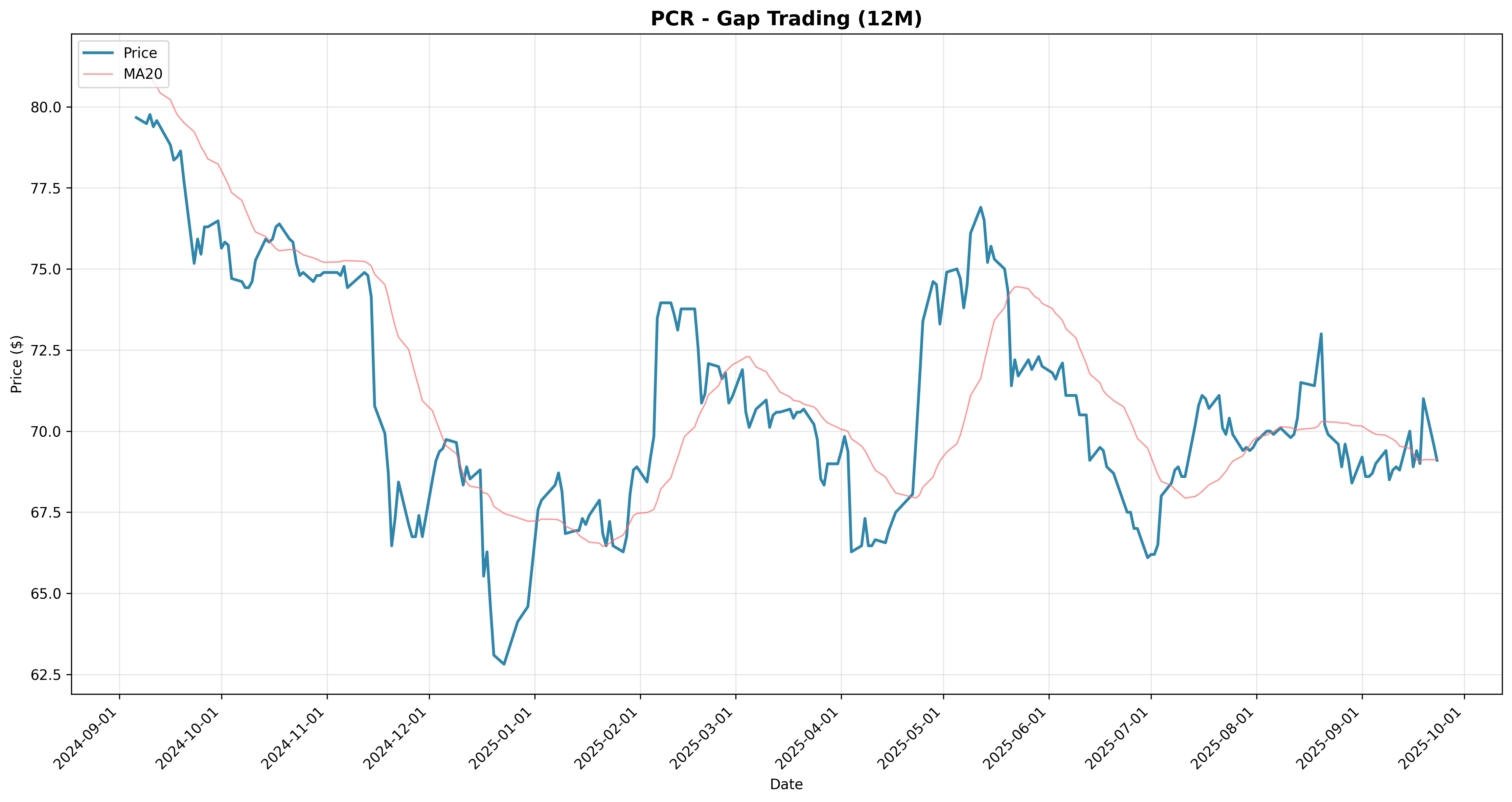
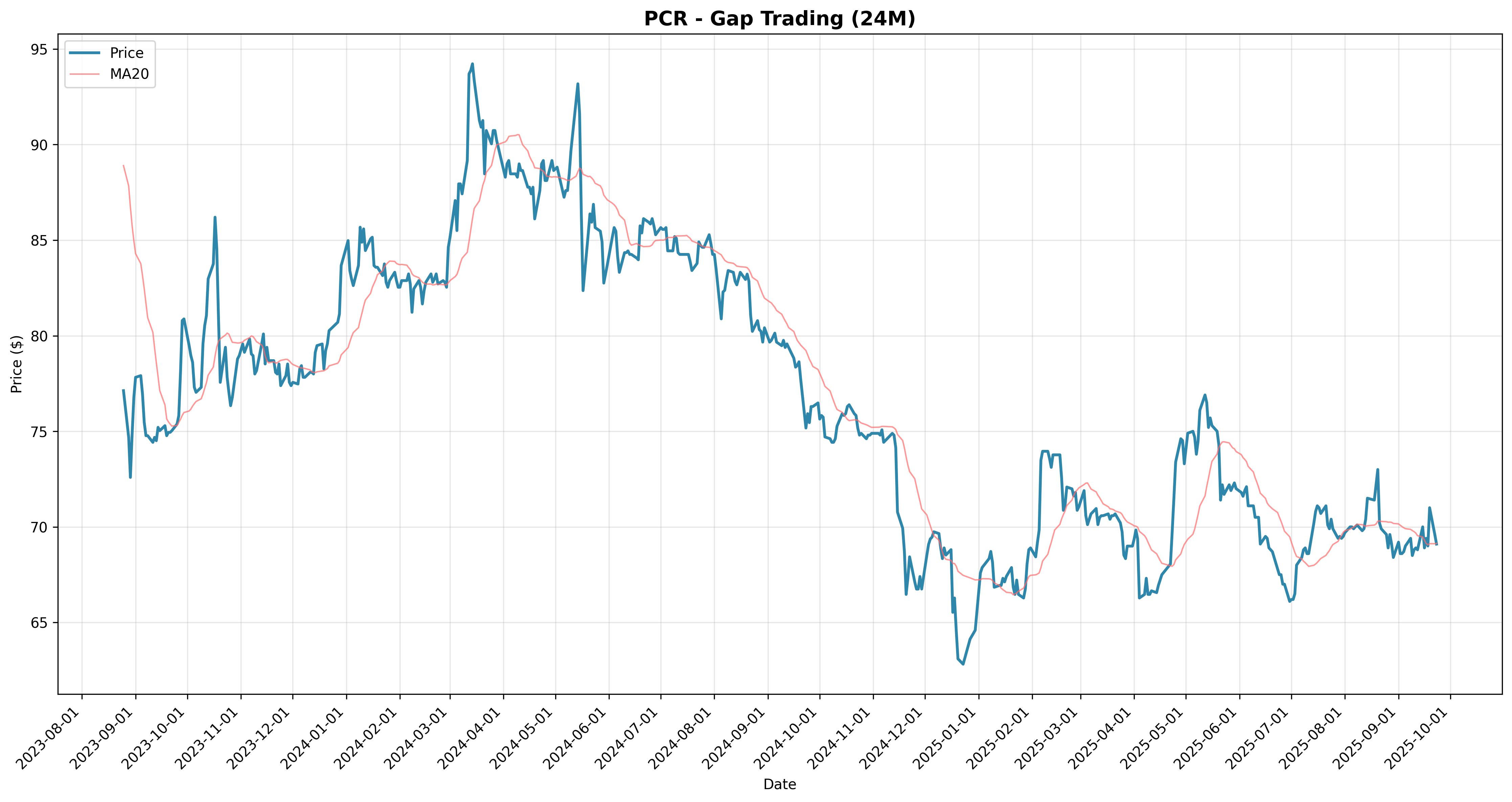
| gap_trading | PCR | 60.48% | 1.9% | -1.6% | -8.1% | -8.3% | -385.48% | 0.00 | 0.00% | 1 | 0.00% | $160,480 |
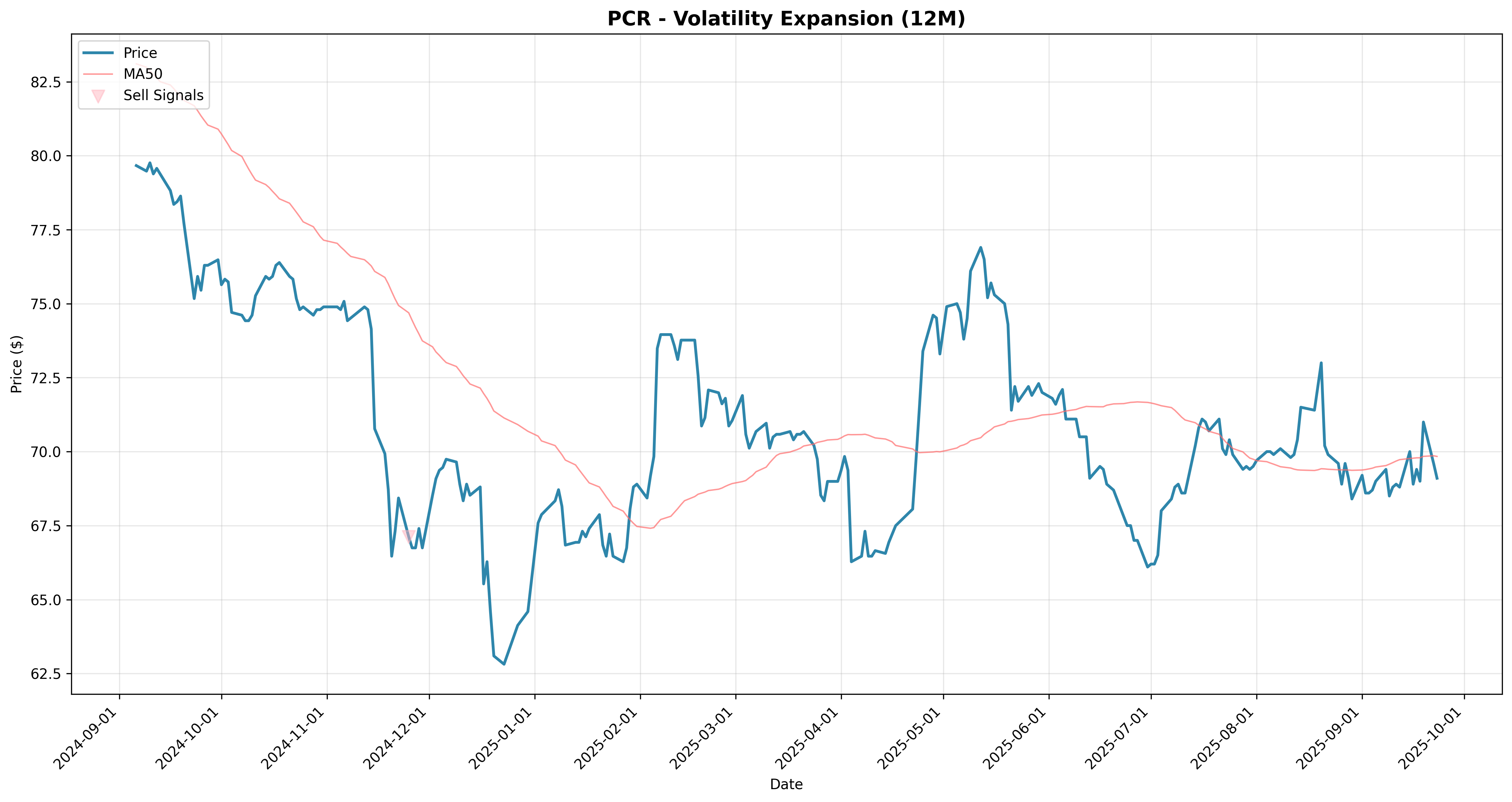
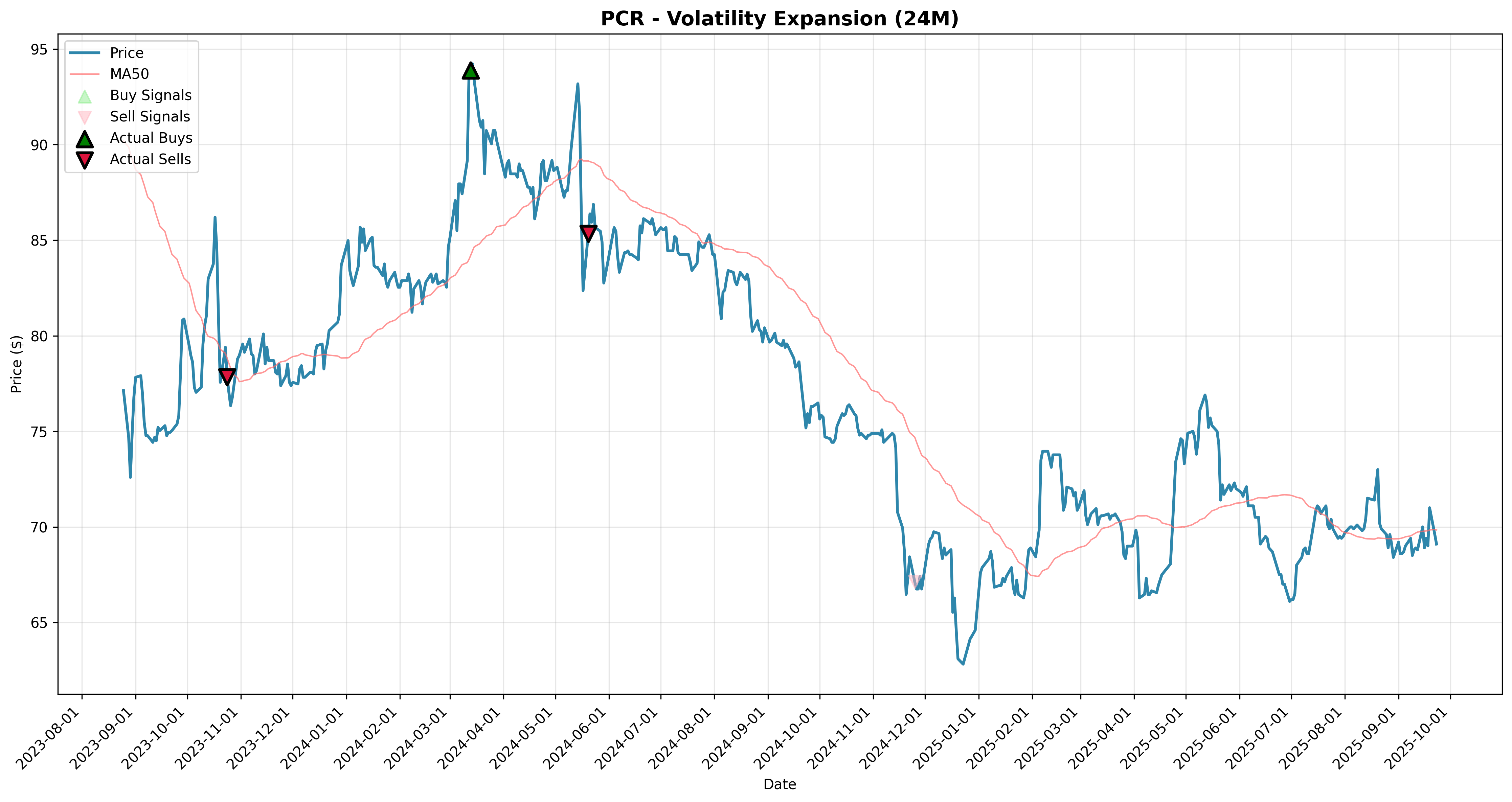
| volatility_expansion | PCR | 430.60% | 0.0% | 0.0% | 0.0% | -6.2% | -15.36% | 0.68 | -53.22% | 6 | 50.00% | $530,604 |
| momentum_kirkpatrick | PCR | 384.61% | -1.9% | -2.0% | 3.7% | 1.4% | -61.35% | 0.77 | -29.19% | 110 | 50.00% | $484,614 |
Best Strategy: volatility_expansion
- Symbol: PCR
- Total Return: 430.60%
- Sharpe Ratio: 0.68
- Max Drawdown: -53.22%
- Final Portfolio Value: $530,604
Key Metrics
- Initial Capital: $100,000
- Analysis Date: 2025-09-24
- Portfolio Manager: Active (Extreme returns fix applied)
Period Analysis
This report includes period-based return analysis for the following timeframes:
- 3M Return: Performance over the last 3 months
- 6M Return: Performance over the last 6 months
- 12M Return: Performance over the last 12 months
- 24M Return: Performance over the last 24 months
Period-based analysis helps identify strategy behavior across different market conditions and time horizons.
Recent Trading Signals
📊 Today’s Signals (2025-09-24)
⚪ No new trading signals detected in today’s analysis.
📈 Most Recent Signals by Strategy
🔴 Trend Momentum: Last SELL on 2025-09-16
- 📊 Total Confidence: 75.5%
- 🟢 Composite: 72.1%
- 🔵 Conservative: 6.3%
- 🔴 Aggressive: 100.0%
- 🟡 Institutional: 99.0%
- 🟣 Quantitative: 100.0%
🔴 Volume Confirmation: Last SELL on 2025-09-12
- 📊 Total Confidence: 21.4%
- 🟢 Composite: 26.3%
- 🔵 Conservative: 0.0%
- 🔴 Aggressive: 21.4%
- 🟡 Institutional: 27.6%
- 🟣 Quantitative: 31.8%
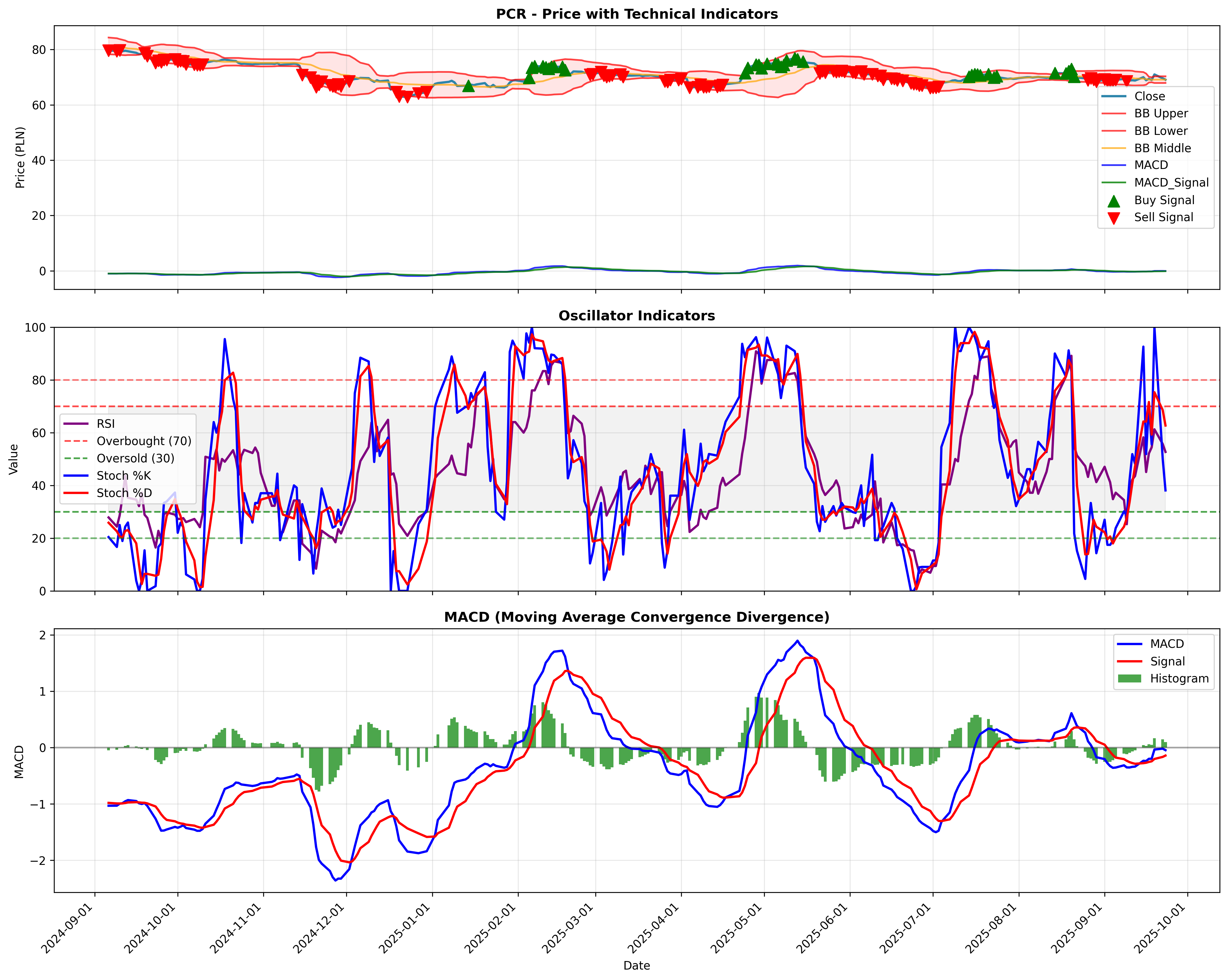
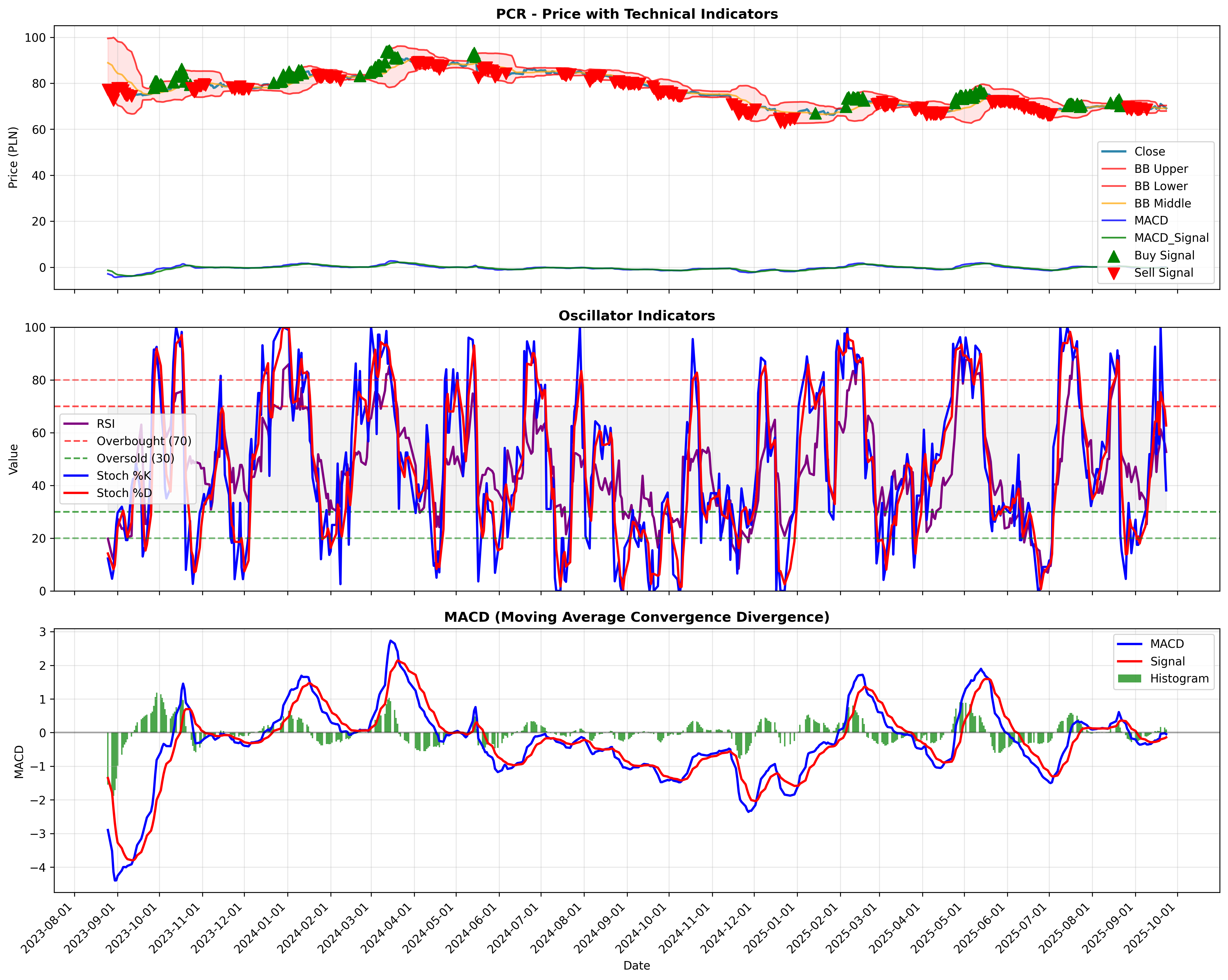
🔴 Bollinger Oscillators: Last SELL on 2025-08-20
- 📊 Total Confidence: 10.7%
- 🟢 Composite: 14.0%
- 🔵 Conservative: 0.0%
- 🔴 Aggressive: 11.4%
- 🟡 Institutional: 14.0%
- 🟣 Quantitative: 14.0%
🟢 Macd Divergence: Last BUY on 2024-04-17
- 📊 Total Confidence: 0.3%
- 🟢 Composite: 0.0%
- 🔵 Conservative: 1.6%
- 🔴 Aggressive: 0.0%
- 🟡 Institutional: 0.0%
- 🟣 Quantitative: 0.0%
🟢 Breakout Momentum: Last BUY on 2025-09-19
- 📊 Total Confidence: 23.9%
- 🟢 Composite: 30.1%
- 🔵 Conservative: 0.0%
- 🔴 Aggressive: 24.6%
- 🟡 Institutional: 32.2%
- 🟣 Quantitative: 32.6%
🟢 Relative Strength Rotation: Last BUY on 2025-05-02
- 📊 Total Confidence: 22.8%
- 🟢 Composite: 28.7%
- 🔵 Conservative: 0.0%
- 🔴 Aggressive: 23.5%
- 🟡 Institutional: 30.2%
- 🟣 Quantitative: 31.3%
🟢 Gap Trading: Last BUY on 2021-03-01
- 📊 Total Confidence: 48.2%
- 🟢 Composite: 30.2%
- 🔵 Conservative: 30.0%
- 🔴 Aggressive: 56.3%
- 🟡 Institutional: 63.1%
- 🟣 Quantitative: 61.2%
🔴 Volatility Expansion: Last SELL on 2024-11-25
- 📊 Total Confidence: 22.7%
- 🟢 Composite: 30.8%
- 🔵 Conservative: 0.0%
- 🔴 Aggressive: 25.3%
- 🟡 Institutional: 32.6%
- 🟣 Quantitative: 24.7%
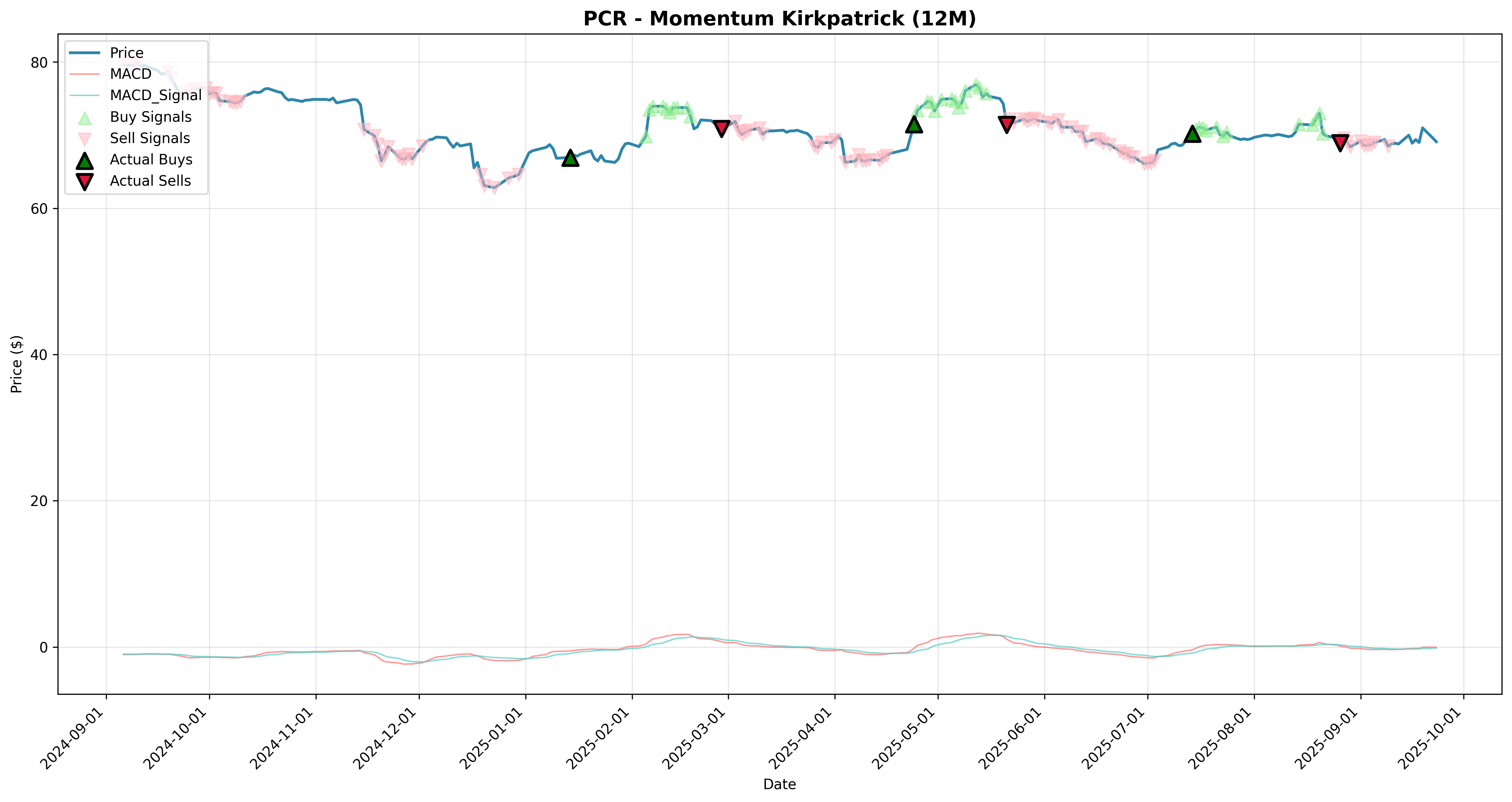
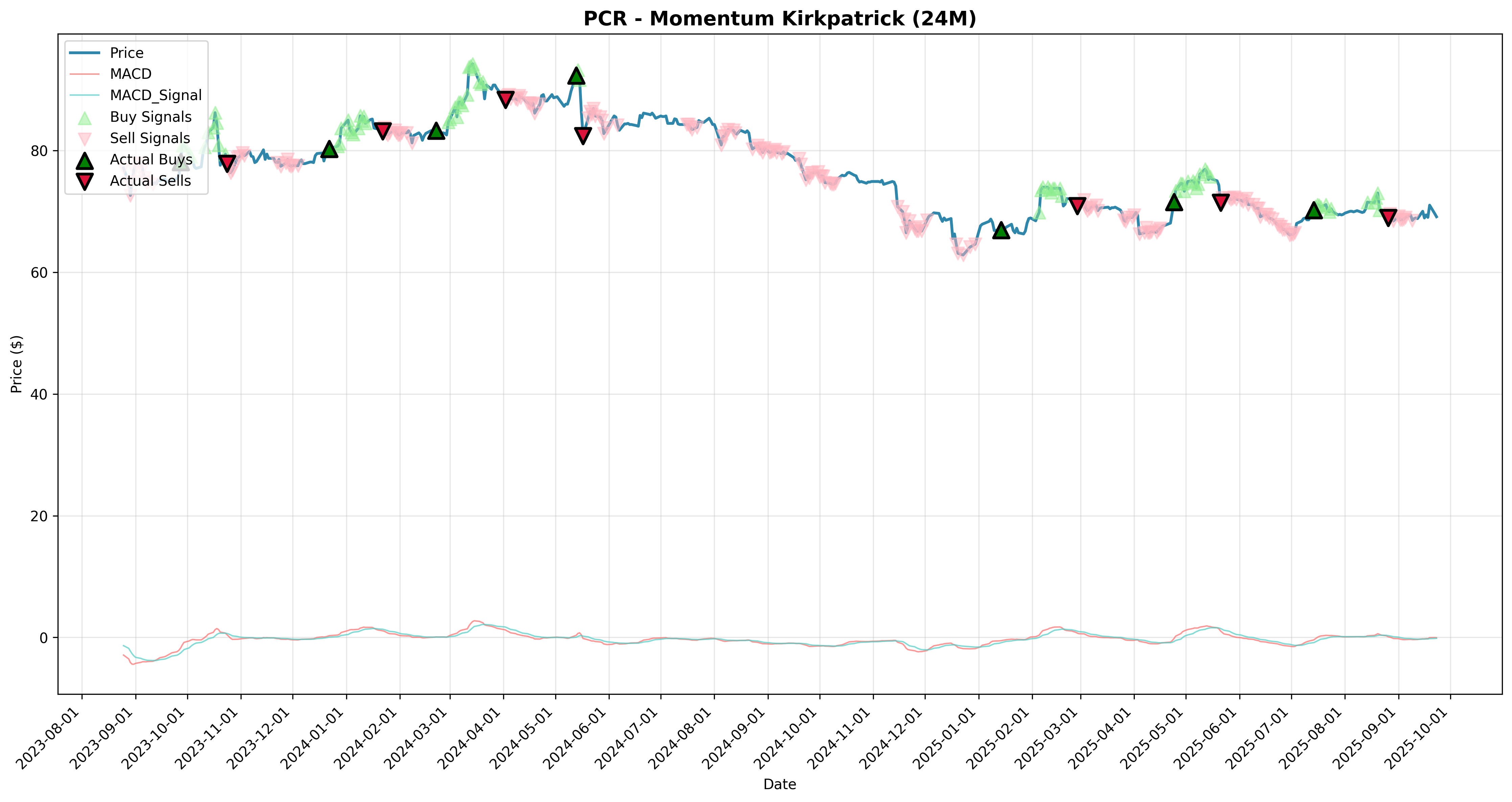
🔴 Momentum Kirkpatrick: Last SELL on 2025-09-09
- 📊 Total Confidence: 30.2%
- 🟢 Composite: 32.4%
- 🔵 Conservative: 9.2%
- 🔴 Aggressive: 26.4%
- 🟡 Institutional: 45.2%
- 🟣 Quantitative: 37.6%
📊 How Confidence Is Calculated
Confidence percentages tell you how much to trust a trading signal based on the strategy’s historical performance.
🎯 Current Method: Composite (Balanced)
- Sharpe Ratio: Up to 20 points (risk-adjusted returns)
- Win Rate: Up to 30 points (percentage of profitable trades)
- Total Return: Up to 50 points (overall profitability)
📈 Available Confidence Methods:
- 🟢 Composite (Balanced): Current method - balanced approach for most traders
- 🔵 Conservative (Risk-Averse): Emphasizes safety and downside protection
- 🔴 Aggressive (Growth-Focused): Prioritizes high returns over risk
- 🟡 Institutional (Modern Portfolio Theory): Professional fund management approach
- 🟣 Quantitative (Statistical): Mathematical and statistical measures
🎯 Confidence Levels:
- 70%+: Strong performer - trust this signal more
- 50-70%: Decent performer - moderate trust
- 30-50%: Weak performer - be cautious
- <30%: Poor performer - low trust
💡 Signal Interpretation
- 🟢 BUY signals: Suggest potential upward price movement
- 🔴 SELL signals: Suggest potential downward price movement
- ⚪ HOLD signals: Suggest maintaining current position
- 📊 Confidence: Higher percentages indicate stronger signal conviction
- 🎯 CONSENSUS: Overall recommendation based on multiple strategy agreement
📚 Detailed Confidence Method Explanations
🟢 Composite (Balanced) - Current Method
Formula: (Sharpe×20) + (WinRate×30) + (Return×50)
Used by: Individual traders, retail investors
Why: Balanced approach that considers risk, consistency, and returns equally. Good for most trading styles.
Example: Strategy with 0.4 Sharpe, 60% win rate, 80% return = (0.4×20) + (0.6×30) + (0.8×50) = 66% confidence
🔵 Conservative (Risk-Averse)
Formula: (Sharpe×25) + (WinRate×35) + (Return×40) - DrawdownPenalty + SafetyBonus
Used by: Pension funds, insurance companies, risk-averse investors
Why: Prioritizes capital preservation over growth. Heavily penalizes strategies with large drawdowns.
Key Features:
- Higher weight on consistency (win rate)
- Penalty for drawdowns >5%
- Bonus for low-risk strategies
- Caps returns at 50% to avoid overvaluing risky strategies
🔴 Aggressive (Growth-Focused)
Formula: (Return×60) + (Sharpe×15) + (WinRate×25) + HighReturnBonus
Used by: Hedge funds, growth investors, aggressive traders
Why: Maximizes returns regardless of risk. Suitable for investors who can tolerate volatility.
Key Features:
- 60% weight on raw returns
- Lower weight on risk adjustment
- Bonus for strategies with >50% returns
- Allows returns up to 200% contribution
🟡 Institutional (Modern Portfolio Theory)
Formula: InfoRatio + Consistency + RiskAdjustedReturn + ReturnComponent + SignificanceBonus
Used by: Mutual funds, pension funds, institutional investors
Why: Based on academic finance theory and institutional requirements. Emphasizes statistical significance.
Key Features:
- Information ratio (like Sharpe but more robust)
- Return-to-drawdown ratio
- Bonus for statistically significant results (>100 trades)
- Follows modern portfolio theory principles
🟣 Quantitative (Statistical)
Formula: CalmarRatio + SterlingRatio + WinRate + Return + SampleSize + StatisticalSignificance
Used by: Quantitative funds, algorithmic trading systems, research institutions
Why: Uses advanced statistical measures and mathematical optimization. Most rigorous approach.
Key Features:
- Calmar ratio (return/max drawdown)
- Sterling ratio (similar to Calmar)
- Sample size adjustment for statistical validity
- T-statistic proxy for significance testing
- Mathematical optimization of weights
🏛️ Financial Industry Context
Goldman Sachs: Uses similar multi-factor scoring for strategy selection
Renaissance Technologies: Employs statistical significance testing like our Quantitative method
Bridgewater: Emphasizes risk parity similar to our Conservative approach
AQR: Uses academic factors like our Institutional method
Two Sigma: Applies quantitative methods similar to our Statistical approach